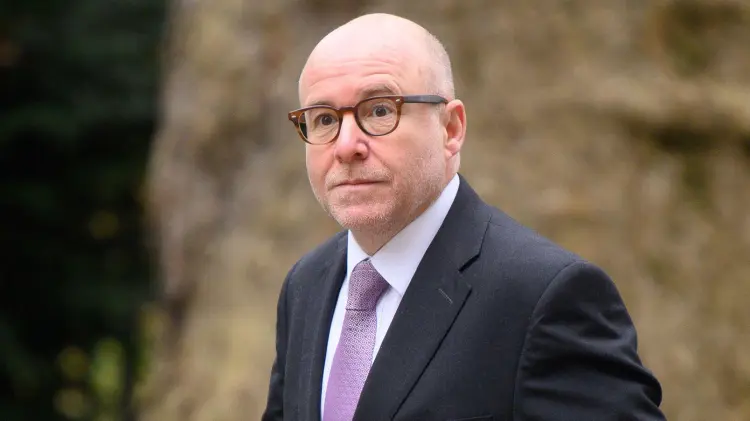
His Honour Judge Nicholas Edward Rowland is a Circuit Judge of England and Wales assigned to the South West Circuit and based at Southampton Crown Court.
A barrister of over 25 years’ standing before his appointment to the bench, Judge Rowland has recently come under intense national and international scrutiny following a series of sentencing decisions in serious sexual offence cases that have sparked significant public debate about judicial accountability, victim justice, and the adequacy of the sentencing framework in England and Wales.
Profile
| Full Name | His Honour Judge Nicholas Edward Rowland |
| Nationality | British |
| Occupation | Circuit Judge, England and Wales (South West Circuit) |
| Court | Southampton Crown Court |
| Called to the Bar | 1988 |
Early Life
Detailed public records regarding Judge Nicholas Rowland’s early life and personal background are limited, as is typical for members of the English judiciary, who maintain a private profile outside of their professional duties. What is known is that he was called to the Bar in 1988, suggesting he completed his legal education in the mid-to-late 1980s. He is associated with 3 Paper Buildings (3PB), one of the UK’s oldest and most respected barristers’ chambers, which provided the base for his practice prior to his elevation to the judiciary.
Education
Judge Rowland undertook legal training in preparation for his call to the Bar in 1988. The precise details of his educational institutions have not been extensively documented in public records. Like most barristers of his generation, he would have studied law at university and then completed the Bar Vocational Course before being called to the Bar by one of the four Inns of Court in London. His call in 1988 indicates he began his legal education in the mid-1980s.
Career
Nicholas Rowland was called to the Bar in 1988 and subsequently practised as a barrister for over 25 years. During his time at the Bar, he built a reputation as a capable advocate, specialising in criminal law. He was a member of 3 Paper Buildings (3PB) chambers, one of the oldest barristers’ sets in England, known for its strength in criminal, family, and civil matters.
He was appointed to the Circuit bench, assigned to the South West Circuit, and has been based at Southampton Crown Court. His appointment was announced in the Autumn 2014 edition of 3PB’s newsletter, noting his elevation to the Crown Court bench. As a Circuit Judge, he presides over criminal trials including the most serious Crown Court matters as well as appeals from the Magistrates’ Court.
Judge Rowland’s name appeared in public record searches as listed on the Courts and Tribunal Judiciary website’s official list of Circuit Judges, confirming his active judicial service.
Controversies
Judge Nicholas Rowland has become one of the most controversial figures in the English judiciary in 2026, following a series of high-profile sentencing decisions that have attracted widespread criticism from victims’ advocates, legal experts, government officials, and the general public.
The most prominent controversy surrounds his sentencing in the Fordingbridge case. Following a five-week trial at Southampton Crown Court that concluded on March 5, 2026, three teenage boys from a traveller community in Hampshire were convicted of multiple counts of rape against two schoolgirls aged 14 and 15, committed in two separate premeditated incidents in 2024 and 2025. The attacks were filmed, and the footage was shared online. Judge Rowland sentenced all three boys two aged 15 and one aged 14 to Youth Rehabilitation Orders rather than custodial sentences, a decision that sparked immediate national outrage.
Critics argued that the sentences failed to reflect the gravity of the offences, the premeditated nature of the attacks, and the severity of the trauma inflicted on the victims. A petition calling for an investigation of Judge Rowland and the introduction of a Judicial Accountability Framework attracted hundreds of thousands of signatures within days of the sentencing.
The controversy deepened when it emerged that the Fordingbridge case was not an isolated incident. In a previous rape case, Judge Rowland sentenced restaurant manager Joshua Blachford who admitted rape to three years and nine months in prison. The Solicitor-General, Ellie Reeves, challenged the sentence as unduly lenient. Court of Appeal judges agreed the sentence was too low, though they concluded the discrepancy was not sufficiently extreme to warrant intervention. Additionally, Judge Rowland reportedly gave convicted sex offender Daniel Rushton, who was caught with images of bestiality, a 12-month community order, despite Rushton having previously received a suspended jail sentence in 2023 for attempting sexual communication with a child online.
These cumulative cases have placed Judge Rowland at the centre of a broader national conversation about judicial sentencing practices, the adequacy of oversight mechanisms for judges, and the justice system’s treatment of sexual violence victims. As of May 2026, calls for a formal investigation and judicial reform continue to grow.
Personal Life
In keeping with the conventions of the English judiciary, Judge Rowland maintains a private personal life. No information about his family or personal circumstances is available in the public domain.
FAQs
Who is Judge Nicholas Rowland?
His Honour Judge Nicholas Rowland is a Circuit Judge based at Southampton Crown Court on the South West Circuit in England and Wales, called to the Bar in 1988 after practising as a barrister for over 25 years.
Why is Judge Nicholas Rowland controversial?
He attracted national controversy in 2026 after sentencing three teenage boys convicted of multiple rapes to Youth Rehabilitation Orders rather than custodial sentences, a decision widely criticised as inadequate and which led to calls for judicial accountability reform.
Has the government challenged Judge Rowland’s sentences before?
Yes. The Solicitor-General previously challenged a separate rape sentence he handed down as unduly lenient, and Court of Appeal judges agreed the sentence was too low, though not sufficiently so to warrant direct intervention.
What chambers was Judge Rowland associated with?
He was associated with 3 Paper Buildings (3PB), one of England’s oldest barristers’ chambers.
Conclusion
His Honour Judge Nicholas Rowland’s career has been propelled into an unexpected spotlight not through exceptional judicial achievement but through a series of sentencing decisions that have crystallised longstanding concerns about the consistency and adequacy of the judicial response to sexual violence in England and Wales. His cases have become catalysts for a broader national debate about judicial accountability, victims’ rights, and whether the current legal framework is equipped to deliver justice that adequately reflects the harm caused by serious sexual offences. Whatever the eventual outcomes of ongoing reviews, his name has become inseparable from these critical conversations about the English justice system.