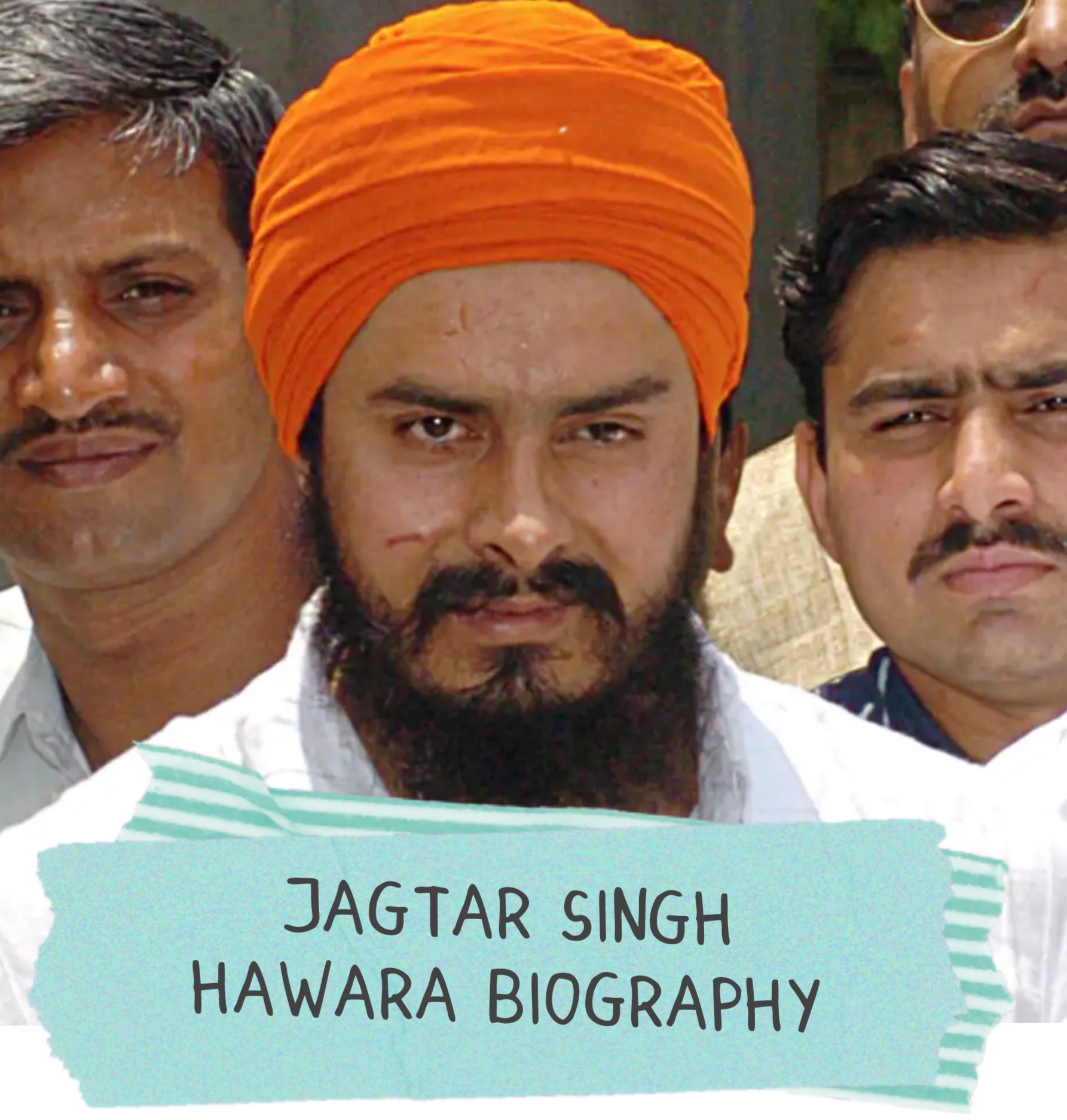
Jagtar Singh Hawara is an Indian Sikh figure who became known for his involvement in the assassination case of former Punjab Chief Minister Beant Singh. Born on May 17, 1970, in Hawara village, Punjab, he became associated with Babbar Khalsa International during the period of Sikh militancy in Punjab. His name later became closely linked to one of the most prominent political assassination cases in modern Punjab history.
Hawara was convicted for his role in the 1995 assassination of Beant Singh, who was killed in a bomb blast outside the Punjab and Haryana Civil Secretariat in Chandigarh. He was initially sentenced to death in 2007, but the Punjab and Haryana High Court later commuted the sentence to life imprisonment. He has spent decades in prison and remains a major subject of discussion among Sikh organisations and supporters of imprisoned Sikh prisoners.
In 2026, Jagtar Singh Hawara returned to the spotlight because of his parole request to visit his elderly and ailing mother. Punjab Chief Minister Bhagwant Mann supported a 10-day parole request, while Punjab Governor Gulab Chand Kataria also recommended parole. His case has sparked renewed public debate and protests in Punjab, making his biography and current legal status a major topic of interest.
Jagtar Singh Hawara Early Life and Background
Jagtar Singh Hawara was born on May 17, 1970, in Hawara village in Fatehgarh Sahib district of Punjab, India. He grew up in a Punjabi Sikh family during a period when Punjab was facing major political and social tensions. His father died in 1991, while his mother, Narinder Kaur, remained an important figure in his life. His family background later became part of the public discussion surrounding his long imprisonment.
Hawara spent his early years in Punjab and grew up during the period of growing Sikh militancy in the state. The political situation in Punjab became increasingly tense during the 1980s and early 1990s. This period influenced many young people in the region and shaped the environment in which Hawara later became involved with Sikh militant activities. He eventually became associated with Babbar Khalsa International.
Details about Hawara’s childhood, school years and personal experiences are limited in reliable public records. Most information about his early life comes from later court proceedings and reports about his activities. His life changed significantly when he became involved in militant activities, eventually leading to his arrest and conviction in connection with the assassination of former Punjab Chief Minister Beant Singh.
Jagtar Singh Hawara Education
Publicly available biographical information about Hawara’s formal school and university education is limited. There is no reliable current record establishing a university degree or professional qualification. His biography is primarily documented through his political activities, criminal cases, imprisonment and court proceedings.
Jagtar Singh Hawara Career
Jagtar Singh Hawara’s career took a different path from a conventional professional career. He became involved in Sikh militancy in Punjab during the period of political violence in the state. He was associated with Babbar Khalsa International and later became one of the key figures linked to the organisation’s activities. His involvement eventually brought him into the centre of a major criminal investigation.
Hawara became widely known because of his alleged role in the conspiracy to assassinate former Punjab Chief Minister Beant Singh. On August 31, 1995, Beant Singh was killed in a bombing outside the Punjab and Haryana Civil Secretariat in Chandigarh. Sixteen other people also died in the attack. The Punjab and Haryana High Court later described Hawara as an active participant in the conspiracy and convicted him in connection with the case.
His involvement in the case led to a long period of legal proceedings and imprisonment. In 2007, a Chandigarh trial court convicted Hawara and sentenced him to death. He challenged the sentence before the Punjab and Haryana High Court. In October 2010, the High Court commuted his death sentence to life imprisonment, while directing that he should not be released from prison for the rest of his life.
Hawara also became known for his escape from the high-security Burail Jail in Chandigarh. In January 2004, he escaped through a tunnel along with other prisoners. He remained at large for more than a year before being arrested by the Delhi Police Special Cell in June 2005. His escape became another major chapter in his criminal history and contributed to his classification as a high-risk prisoner.
Since his conviction, Hawara’s public profile has largely centred on his imprisonment, court cases and legal appeals. He has remained in custody for decades and has continued to pursue legal remedies concerning his detention and parole. In July 2026, the Punjab and Haryana High Court ordered authorities to follow a time-bound procedure for considering his parole request to visit his ailing mother.
Today, Hawara is not known for a conventional career but for his place in Punjab’s political and legal history. His name remains connected to the Beant Singh assassination case, his long imprisonment and continuing parole proceedings. His case continues to attract attention from political parties, Sikh organisations and the wider public, particularly because of the debate over his request to meet his elderly mother.
Punjab Bandh and Renewed Parole Demand
Jagtar Singh Hawara has returned to national attention in August 2026 because of growing demands for his parole. Punjab Chief Minister Bhagwant Mann asked the Governor to grant Hawara 10 days of parole so he could meet his elderly and ailing mother. Punjab Governor Gulab Chand Kataria later said he had recommended parole on humanitarian grounds.
The issue has since developed into a larger public protest. Sikh organisations and the Qaumi Insaaf Morcha called for a statewide Punjab bandh on August 21, 2026, demanding the release of long-term Sikh prisoners and parole for Hawara. The shutdown affected markets, transport and normal activities in several parts of Punjab, bringing renewed attention to Hawara’s imprisonment and his request to meet his mother.
The parole issue remains unresolved, with recent reports indicating that the process has been put on hold amid continuing discussions. Hawara’s case has therefore become a major legal, political and religious issue in Punjab. His supporters continue to demand his parole, while authorities remain responsible for deciding the request under the applicable prison and security procedures.
Jagtar Singh Hawara Personal Life and Family
Jagtar Singh Hawara was born into a Sikh family in Hawara village, Fatehgarh Sahib, Punjab. His mother’s name is Narinder Kaur, while his father died in 1991. Hawara also has an elder brother named Avtar Singh, who was serving as the village sarpanch at the time of Hawara’s 2004 jail escape. The family had agricultural land in their native village, and several of Hawara’s relatives lived in the Fatehgarh Sahib and Ludhiana areas.
Hawara married Balwinder Kaur, the daughter of farmer Dara Singh, in 2005. The marriage took place at a gurdwara in village Dohla. The marriage was short-lived, however, as Balwinder Kaur later sought its annulment. Court records reported that she had stayed with Hawara for only about 11 days before returning to her parents’ home. The marriage was subsequently annulled by a Sangrur court in 2006.
His mother, Narinder Kaur, has remained an important figure in Hawara’s personal story. Her appeals for her son to be allowed temporary parole have received renewed attention because of her advanced age and poor health. In recent years, she has sought an opportunity to see Hawara outside prison after decades of separation. Her condition became a major reason behind the latest parole campaign, with Punjab authorities and Sikh organisations supporting calls for Hawara to be allowed to visit her.
Jagtar Singh Hawara Age, Religion, Nationality, Height and Physical Appearance
Jagtar Singh Hawara was born on May 17, 1970, in Hawara village, Fatehgarh Sahib district, Punjab, India. He is 56 years old as of August 21, 2026. His citizenship is Indian, and he comes from a Punjabi Sikh background. His religious identity is Sikhism, which has remained an important part of his public identity throughout his life.
Hawara is an Indian national of Punjabi origin. He was born and raised in Punjab and became associated with Sikh political and militant movements during his younger years. In 2015, a Sarbat Khalsa gathering declared him Jathedar of the Akal Takht while he was in prison. However, the declaration was not recognised by the Shiromani Gurdwara Parbandhak Committee (SGPC).
Jagtar Singh Hawara is listed as approximately 5 feet 11 inches (180 cm) tall. Publicly available information about his current weight and detailed physical measurements is limited. Photographs from his court appearances show him with a full beard and traditionally Sikh appearance. He has spent much of his adult life in prison, so recent public photographs mainly come from court proceedings and prison-related appearances.
Jagtar Singh Hawara Net Worth
Jagtar Singh Hawara’s exact net worth is not publicly documented. He does not have a conventional professional career or publicly known business empire from which a reliable net-worth figure can be calculated. His public record mainly concerns his involvement in the Beant Singh assassination case and his decades of imprisonment.
Before his imprisonment, Hawara’s financial background appears to have been connected mainly to his family and local life in Punjab rather than a high-paying profession. Because there is no reliable record of a substantial salary, business income, investments or major personal assets, assigning him a large net-worth figure would be misleading. A rough estimate of below ₹10 lakh can be used for biography purposes, but this should be treated as an approximate editorial estimate rather than a verified financial figure.
Hawara has spent most of his adult life in prison and has therefore not had the normal opportunity to build wealth through employment or business. His current financial position is consequently difficult to assess. His family’s agricultural background may have provided some household assets, but there is insufficient public information to establish what assets he personally owns. For this reason, his estimated net worth should be presented as modest and uncertain, rather than as a precise figure.
Legacy
Jagtar Singh Hawara remains a controversial figure in Punjab’s modern history. His name is permanently linked to the 1995 assassination of former Punjab Chief Minister Beant Singh, for which he was convicted and sentenced to life imprisonment. His involvement in the case has made him a significant figure in discussions about the period of militancy in Punjab and the political violence that affected the state during the 1980s and 1990s.
Among some Sikh organisations and supporters, Hawara is viewed as a political prisoner and a symbol of the long-running demand for the release of Sikh prisoners who have completed or exceeded their sentences. His supporters have organised campaigns, demonstrations and legal efforts around his imprisonment and parole requests. In 2015, a Sarbat Khalsa gathering also declared him Jathedar of the Akal Takht while he was in prison, although the declaration was not recognised by the SGPC.
His legacy remains deeply divided. For supporters, Hawara represents Sikh resistance and the continuing struggle over the treatment of imprisoned Sikh figures. For the Indian authorities and many others, his legacy is tied to the assassination of an elected chief minister and the deaths of other people in the 1995 bombing. His decades-long imprisonment and the continuing debate over his parole ensure that Jagtar Singh Hawara remains a significant and controversial name in Punjab’s political and legal history.
Conclusion
Jagtar Singh Hawara remains one of the most controversial figures in Punjab’s modern history. His life has been shaped by Sikh militancy, the assassination of former Chief Minister Beant Singh, a death sentence later changed to life imprisonment, and decades behind bars. In 2026, his name returned to public attention because of the growing demand for parole so he can visit his elderly mother. His story continues to generate strong opinions because of the serious crimes for which he was convicted and the continuing support he receives from sections of the Sikh community.
Frequently Asked Questions About Jagtar Singh Hawara
Who is Jagtar Singh Hawara?
Jagtar Singh Hawara is an Indian Sikh figure who was convicted for his role in the assassination of former Punjab Chief Minister Beant Singh in 1995. He was initially sentenced to death, but the sentence was later commuted to life imprisonment.
How old is Jagtar Singh Hawara?
Jagtar Singh Hawara is 56 years old as of August 2026. He was born on May 17, 1970, in Hawara village, Fatehgarh Sahib district, Punjab, India.
What is Jagtar Singh Hawara known for?
Jagtar Singh Hawara is best known for his conviction in the Beant Singh assassination case. He was also associated with Babbar Khalsa International during the period of Sikh militancy in Punjab.
Where is Jagtar Singh Hawara now?
Jagtar Singh Hawara is serving a life sentence in Delhi’s prison system. He has spent decades in custody following his conviction in the Beant Singh assassination case.
Is Jagtar Singh Hawara alive?
Yes. Jagtar Singh Hawara is alive as of August 2026. He remains in prison while legal and political discussions continue around his parole request.
What is Jagtar Singh Hawara’s religion?
Jagtar Singh Hawara is a Sikh and comes from a Punjabi Sikh family in Punjab, India.
Who is Jagtar Singh Hawara’s mother?
Jagtar Singh Hawara’s mother is Narinder Kaur. Her advanced age and health have become central to recent requests for Hawara to be granted parole so he can visit her.
Who is Jagtar Singh Hawara’s wife?
Jagtar Singh Hawara married Balwinder Kaur in 2005. The marriage was short-lived and was later annulled.
What happened to Beant Singh?
Former Punjab Chief Minister Beant Singh was assassinated on August 31, 1995, in a bomb blast outside the Punjab and Haryana Civil Secretariat in Chandigarh. Sixteen other people were also killed in the attack.
Why is Jagtar Singh Hawara in prison?
Jagtar Singh Hawara is in prison because of his conviction for his role in the conspiracy behind the assassination of Beant Singh. His original death sentence was later commuted to life imprisonment.
Is Jagtar Singh Hawara being released?
There has been no confirmed permanent release of Jagtar Singh Hawara. Recent attention has focused on his request for parole to visit his elderly mother.
Why is Jagtar Singh Hawara in the news in 2026?
Jagtar Singh Hawara is in the news because of renewed demands for his parole. Punjab Chief Minister Bhagwant Mann supported a request for 10 days of parole so Hawara could visit his ailing mother, while Sikh organisations have also organised protests around his case.
What is Jagtar Singh Hawara’s net worth?
Jagtar Singh Hawara’s exact net worth is not publicly known. There is no reliable financial record showing significant business holdings, investments or a regular professional income from which his net worth can be accurately calculated.