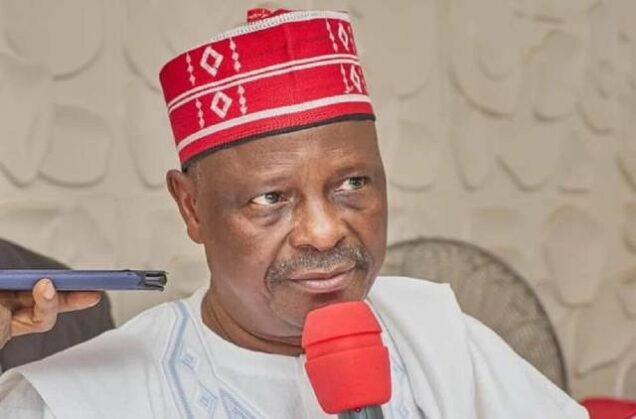
Senator Rabiu Musa Kwankwaso is one of the most enduring, charismatic, and consequential political figures in Nigeria’s Fourth Republic, a man whose trademark red cap and mass following have made “Kwankwasiyya” a political movement synonymous with populism, infrastructural development, and grassroots mobilisation in Kano State and across northern Nigeria.
A two-time governor of Kano, former Minister of Defence, former Senator, presidential aspirant, and now 2027 vice-presidential candidate, his more than four-decade political journey is a testament to the extraordinary staying power of an authentic connection with ordinary Nigerians.
Profile
| Full Name | Rabiu Musa Kwankwaso |
| Born | October 21, 1956 |
| Age | 69 years |
| Birthplace | Kwankwaso Village, Madobi Local Government Area, Kano State, Nigeria |
| State of Origin | Kano State |
| Nationality | Nigerian |
| Occupation | Politician, Civil Engineer (retired), Statesman |
| Religion | Islam |
| Father | Musa Kwankwaso (village head of Kwankwaso; later District Head of Madobi, Majidadin Kano) |
| Spouse | Salamatu Rabiu Musa (married 2000) |
| Children | 6 |
| Net Worth | Not publicly declared |
Early Life
Rabiu Musa Kwankwaso was born on October 21, 1956, in the village of Kwankwaso, a small settlement in Madobi Local Government Area of Kano State that would give him his famous surname and his enduring sense of identity. He grew up in a household of traditional authority and civic responsibility: his father, Musa Kwankwaso, was the village head of Kwankwaso, a respected traditional title that was subsequently elevated to District Head of Madobi, with the prestigious chieftaincy title Majidadin Kano, Hakimin Madobi, conferred by the Kano Emirate Council of Emir Ado Bayero.
Growing up in this environment of community leadership, Rabiu absorbed the values of public responsibility and service from his earliest years. The village of Kwankwaso was a humble but socially rich community, and the young Rabiu developed the empathy for ordinary people that would later define his political philosophy and his extraordinary connection with Kano’s masses. His early life was shaped by the traditional structures of northern Nigerian society, and his subsequent transformation into a modern civil engineer and democratic politician represents a remarkable bridge between tradition and modernity.
Education
Rabiu Musa Kwankwaso completed his secondary school education before proceeding to pursue a degree in Civil Engineering. He obtained his Bachelor of Engineering (B.Eng.) in Civil Engineering, a technical qualification that gave him the professional expertise for his early career in government infrastructure. He began his working life in 1975 at the Kano State Water Resources and Engineering Construction Agency (WRECA), where he served as a civil servant in various capacities for 17 years, eventually rising to the rank of Principal Engineer. This professional background in infrastructure would later directly inform his celebrated development programme as Governor of Kano State, where roads, schools, and physical infrastructure became the centrepieces of his legacy.
Career
Kwankwaso’s political career began during Nigeria’s brief democratic experiment under the Third Republic. In December 1992, he was elected to the House of Representatives as the member for Madobi Constituency, Kano State. He was subsequently elected as the Deputy Speaker of the House of Representatives, a position he held from December 5, 1992, until the military terminated the democratic transition on November 17, 1993.
His executive political career truly launched in 1999 with the return of democracy to Nigeria. After winning the Peoples Democratic Party (PDP) primaries in Kano State against a field that included his later deputy and successor, Abdullahi Ganduje, Kwankwaso was elected Governor of Kano State for his first term (May 29, 1999 – May 29, 2003). His first term was characterised by significant investment in physical infrastructure, education, and healthcare, but also by political turbulence and contests for supremacy within the Kano political establishment.
He lost his re-election bid in 2003 to Ibrahim Shekarau. However, his national profile was undimmed: President Olusegun Obasanjo appointed him as Nigeria’s first Minister of Defence of the Fourth Republic (2003–2007), replacing the legendary General Theophilus Danjuma, a remarkable appointment given that Kwankwaso had no prior military background. He served in this capacity throughout Obasanjo’s second term, demonstrating administrative capacity at the federal level.
He made a triumphant return to Kano in 2011, decisively defeating Shekarau in the governorship election to win a second term (May 29, 2011 – May 29, 2015). His second term is considered his most consequential: he implemented a sweeping infrastructure programme that transformed Kano’s road network, expanded school enrolment through a mass scholarship programme for Kano indigenes, established the Kwankwasiyya Development Foundation, and built a political movement, Kwankwasiyya, that commanded extraordinary popular loyalty, symbolised by the ubiquitous red caps worn by his supporters.
In 2015, he was elected Senator representing Kano Central Senatorial District under the All Progressives Congress (APC), serving one term until 2019. He contested the APC presidential primaries in 2015, losing to Muhammadu Buhari, and the PDP primaries in 2018, losing to Atiku Abubakar. In 2022, he co-opted the New Nigeria Peoples Party (NNPP) as the political vehicle for the Kwankwasiyya movement and emerged as its presidential candidate for the 2023 general elections, polling respectably in a keenly contested race.
Following internal disputes with the NNPP, Kwankwaso resigned from the party in March 2026 and, after a brief association with the African Democratic Congress (ADC), defected to the Nigeria Democratic Congress (NDC) in May 2026. On May 31, 2026, he was ratified as the NDC’s vice-presidential candidate, alongside presidential candidate Peter Obi, as part of the “OK Movement”, a strategic alliance between his Kwankwasiyya base and Obi’s Labour Party/NDC supporters, positioning the pair as a formidable opposition force ahead of the 2027 general elections.
Awards & Recognition
- Special Envoy to Somalia and Darfur – Federal Government of Nigeria appointment
- Consistently listed among Nigeria’s most influential political figures
- Numerous honorary awards and traditional chieftaincy titles from communities across Nigeria
Social Media
Senator Kwankwaso maintains an active presence on Twitter/X under the handle @KwankwasoRM, where he regularly communicates directly with supporters on political and governance matters. He also maintains official Facebook and other social media accounts through which the Kwankwasiyya movement communicates with its substantial following across Kano, northern Nigeria, and the Nigerian diaspora.
Personal Life
Rabiu Kwankwaso married his wife Salamatu Rabiu Musa in 2000. Together, they have six children. His son-in-law, Abba Kabir Yusuf, who married one of Kwankwaso’s daughters, currently serves as the Governor of Kano State, creating a political dynasty that has kept the Kwankwasiyya movement central to Kano’s governance even as Kwankwaso himself operates at the national level. Kwankwaso is known for his attachment to his hometown village of Kwankwaso in Madobi LGA, where he has established the Nafisatu College of Nursing Sciences and continues to personally oversee educational and community development activities.
Net Worth
Senator Kwankwaso has not publicly disclosed his personal net worth. As a career public servant who transitioned into politics, his wealth has been generated primarily through his professional civil engineering career, political offices, and business investments. He established the Kwankwasiyya Development Foundation as a non-profit entity to channel resources toward community development, education, and youth empowerment for the people of Kano and Nigeria.
FAQs
Who is Kwankwaso?
Senator Rabiu Musa Kwankwaso is a veteran Nigerian politician from Kano State who served twice as Governor of Kano State (1999–2003 and 2011–2015), as Minister of Defence (2003–2007), and as Senator (2015–2019). He is the leader of the Kwankwasiyya political movement.
How old is Kwankwaso?
He was born on October 21, 1956, making him 69 years old as of October 2025.
What is the Kwankwasiyya movement?
Kwankwasiyya is a mass political and social movement built around Kwankwaso’s populist brand of leadership, recognised by its symbolic red cap and representing his millions of supporters across Kano and northern Nigeria.
Is Kwankwaso running for president in 2027?
No. He was ratified as the vice-presidential candidate of the Nigeria Democratic Congress (NDC) on May 31, 2026, running alongside presidential candidate Peter Obi ahead of the 2027 elections.
Conclusion
Rabiu Musa Kwankwaso’s political biography is one of the richest and most complex in Nigeria’s Fourth Republic, a narrative of grassroots empowerment, resilience through political adversity, and an enduring connection with ordinary people that few Nigerian politicians have matched. From Kwankwaso village to the governorship of Nigeria’s second most populous state, through the federal cabinet and the Senate and onto the national presidential stage, his journey reflects both the vitality of Nigerian democracy and the power of authentic, people-centred politics. His partnership with Peter Obi for 2027 represents the latest chapter in a political life that shows no signs of conclusion.