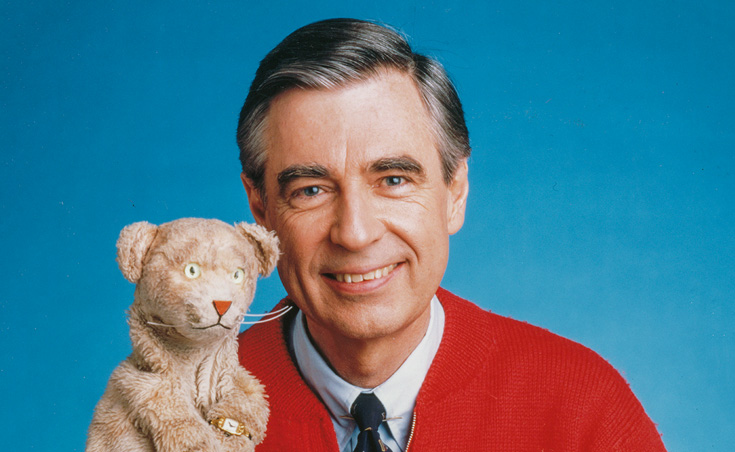
Frederick McFeely Rogers, “Mister Rogers”, was not merely a television personality.
He was a minister, a musician, a puppeteer, a child development advocate, and arguably the most genuinely kind public figure in the history of American media.
For 33 years and 895 episodes, he invited children into his Neighbourhood with the same quiet warmth, the same zippered cardigan, and the same message: “You are special just the way you are.”
In doing so, he shaped the emotional development of multiple generations of Americans and defined what children’s television could be at its best.
Profile
| Full Name | Frederick McFeely Rogers |
| Born | March 20, 1928 |
| Birthplace | Latrobe, Pennsylvania, USA |
| Nationality | American |
| Occupation | Television Host, Producer, Writer, Musician, Puppeteer, Ordained Presbyterian Minister |
| Spouse | Joanne Byrd Rogers (married 1952) |
| Children | James Rogers, John Rogers |
| Siblings | Elaine Rogers Crozier (adopted sister) |
| Date of Death | February 27, 2003 (aged 74) |
| Cause of Death | Stomach cancer |
Early Life
Fred Rogers was born on March 20, 1928, in Latrobe, Pennsylvania, to James Rogers, a prosperous businessman, and his wife Nancy. His was a privileged and loving, if somewhat lonely, childhood. A shy and overweight child, Fred struggled to make friends and was frequently bullied. The two great comforts of his early life were music, he began studying piano at the age of five and would become an accomplished musician, and his grandfather, Fred McFeely, whose affectionate words “I like you just the way you are” became the foundation of the message Rogers would spend his career transmitting to children. When Fred was eleven, his parents adopted a baby girl, Elaine, and Fred’s experience as a protective older sibling deepened his natural empathy. The family was deeply religious, and Christian values of kindness, service, and unconditional love permeated Fred’s upbringing.
Education
Fred Rogers graduated from Latrobe High School and enrolled at Dartmouth College in 1946, later transferring to Rollins College in Winter Park, Florida, where he earned a Bachelor of Science in Musical Composition in 1951. He went on to study for the ministry at Pittsburgh Theological Seminary, earning a Bachelor of Divinity in 1962 and being ordained as a Presbyterian minister. His ordination came with a specific charge from his church: to use the medium of television for the nurturing of children and families. He also pursued graduate studies in child development at the University of Pittsburgh, studying under pioneering child psychiatrist Dr. Margaret McFarland, whose influence on his understanding of children’s emotional needs was profound.
Career
Fred Rogers’s television career began in 1951 at NBC in New York, where he worked as a floor director. He quickly grew disillusioned with commercial television, however, returning to Pittsburgh in 1953 to work at WQED, the nation’s first community-supported public television station. There, he helped create and produce The Children’s Corner (1954–1961), a groundbreaking children’s programme in which he operated puppets behind the scenes and introduced several characters who would later appear in his Neighbourhood, including Daniel Tiger and King Friday XIII. It was during this period that the entire world of Mister Rogers’ Neighbourhood was first imagined and developed.
In 1963, Rogers moved to Toronto to create and host Misterogers for the Canadian Broadcasting Corporation (CBC). Returning to Pittsburgh in 1966, he developed the programme into its definitive form as Mister Rogers’ Neighbourhood, which began broadcasting nationally on PBS in 1968. Over the next 33 years and 895 episodes, the show became one of the most beloved and influential programmes in television history. Every episode followed the same warm ritual: Rogers entering his home, changing from his jacket into a cardigan sweater, exchanging his shoes for sneakers, and inviting viewers into a world of emotional honesty, imaginative play, and unconditional affirmation. Each episode addressed real topics in children’s lives, divorce, death, war, disability, anger, fear, with a gentleness and directness that no other show had ever managed.
Perhaps the most celebrated moment of Rogers’s public career came in 1969, when the U.S. Senate was considering cutting $20 million from PBS’s funding. Rogers appeared before the Senate Subcommittee on Communications and addressed Chairman John Pastore in a quiet, six-minute speech about the value of children’s television. Pastore, initially impatient and dismissive, was visibly moved by the end, saying: “I think it’s wonderful. Looks like you just earned the $20 million.” The full funding was restored. The moment has been called one of the most effective testimonies ever delivered to Congress.
Awards and Honours
- Four Daytime Emmy Awards (Outstanding Children’s Series)
- Daytime Emmy Lifetime Achievement Award (1997)
- Presidential Medal of Freedom (2002), awarded by President George W. Bush
- Inducted into the Television Hall of Fame (1999)
- Peabody Award
- 40 honorary degrees
- Inducted into the American Academy of Arts and Letters
- Portrayed by Tom Hanks in the 2019 biopic A Beautiful Day in the Neighborhood
Personal Life
Fred Rogers married Joanne Byrd on June 9, 1952. They had two sons, James and John. Joanne, herself a concert pianist, was his devoted partner and closest companion for over 50 years. Rogers was an ordained Presbyterian minister whose Christian faith was inseparable from his professional identity. He swam every morning, maintained a strict vegetarian diet, and was deeply deliberate about everything he did, including the exact words he chose for every episode of his programme.
Death
Fred Rogers retired from producing new episodes of Mister Rogers’ Neighbourhood in 2001. In late 2002, he was diagnosed with stomach cancer. His last public appearance was tossing the coin at the 2003 Rose Bowl. He underwent surgery that was unsuccessful, and he died at home in Pittsburgh on February 27, 2003, surrounded by his family. He was 74 years old. The world mourned the loss of a man who had, in the simplest and most profound way, made it a better place.
Conclusion
Fred Rogers was not the accidental creation of a television format but a fully intentional minister who chose the medium of children’s television as his congregation. Everything about him, the cardigans knitted by his mother, the fish he fed, the trolley to the Neighbourhood of Make-Believe, was deliberate, considered, and in service of a single belief: that every child deserves to be told they matter exactly as they are. More than two decades after his death, in a world that has become louder, faster, and more fractured, the world he created remains a sanctuary. We could all use a neighbour like Fred.