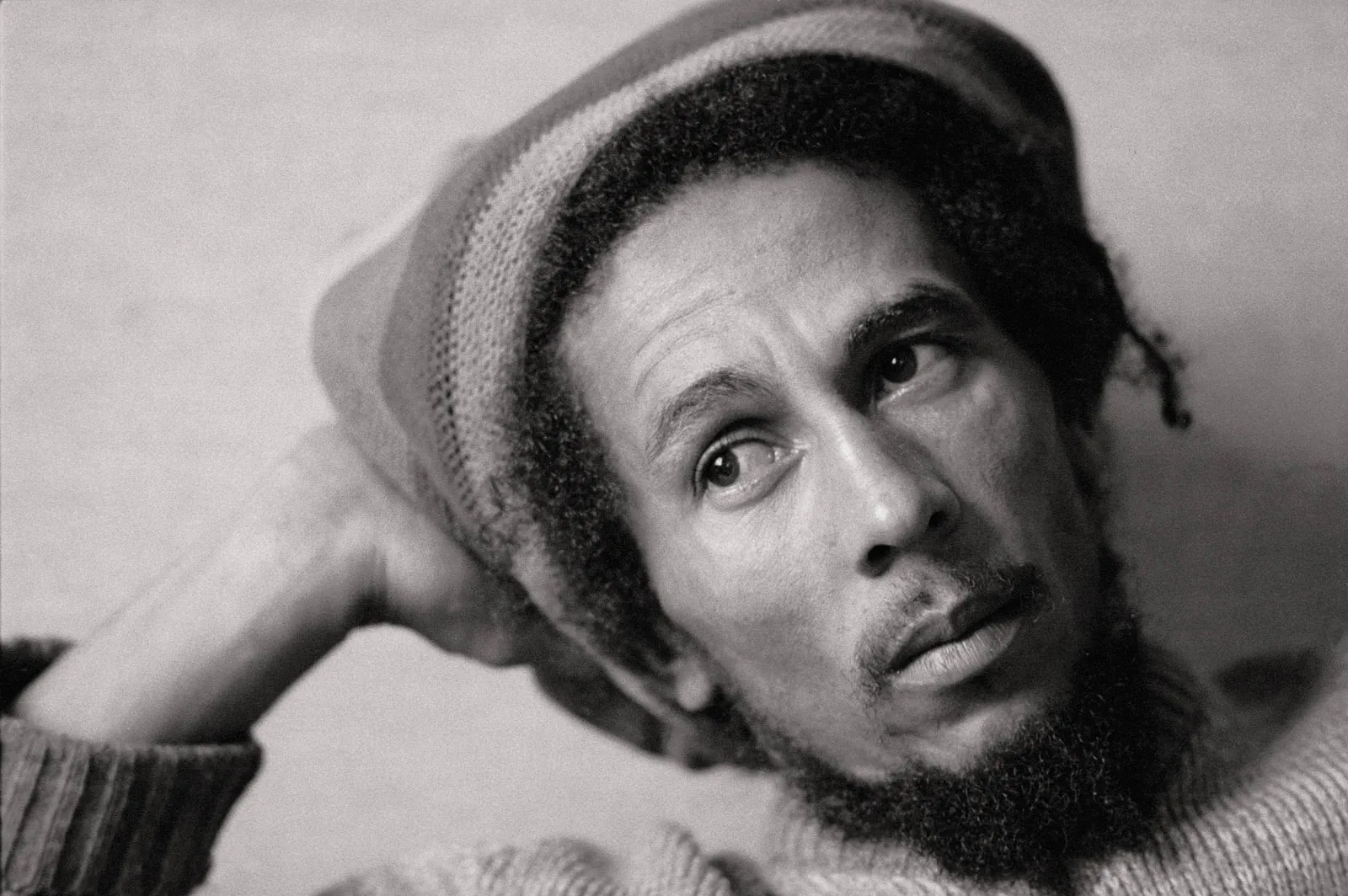
Bob Marley remains one of the most influential musicians in history, credited with introducing reggae music to a global audience and becoming a symbol of the Rastafari movement, social justice, and spiritual awakening.
Although he passed away in 1981, his music and message continue to resonate with millions of fans worldwide decades later.
This biography covers Bob Marley’s early life, education, rise to fame, career, family, discography, and lasting legacy.
Profile
| Full Name | Robert Nesta Marley (born Nesta Robert Marley) |
| Stage Name | Bob Marley |
| Born | February 6, 1945 |
| Died | May 11, 1981 (aged 36) |
| Birthplace | Nine Mile, St. Ann Parish, Jamaica |
| Nationality | Jamaican |
| Occupation | Singer-songwriter, Musician, Guitarist, Activist |
| Religion | Rastafari (baptized into Ethiopian Orthodox Christian Church before death) |
| Parents | Norval Sinclair Marley (father), Cedella Booker/Malcolm (mother) |
| Spouse | Rita Marley (married 1966-1981) |
| Children | Sharon, Cedella, Robert, Rohan, Karen, Stephanie, Julian, Ky-Mani, Ziggy, Damian, Stephen (11 children) |
Early Life
Bob Marley was born Nesta Robert Marley on February 6, 1945, in Nine Mile, St. Ann Parish, Jamaica (later changed by passport officials to Robert Nesta Marley). His father, Norval Sinclair Marley, was a white Englishman and a middle-aged captain in the West Indian regiment of the British Army, while his mother, Cedella Booker (also known as Cedella Malcolm), was a young Jamaican teenager. The couple married in 1944, but Norval left for Kingston shortly after, leaving Cedella to raise Bob largely on her own. Norval Marley died in 1957, having seen his son only a handful of times.
Marley’s parents separated when he was about six years old, and he moved with his mother to Kingston’s Trenchtown neighborhood, joining the wave of rural Jamaicans migrating to the capital during the 1950s and 1960s. Trenchtown, a poor west Kingston slum named after the sewer trench that ran through it, would become the backdrop for Marley’s musical awakening and the place where he formed lifelong friendships and musical partnerships, including with Peter Tosh and Bunny Wailer (Bunny Livingston).
Career
Bob Marley’s musical career began in 1963 when he, Peter Tosh, and Bunny Wailer formed a vocal group in Trenchtown that would become known as The Wailing Wailers, later simply The Wailers. The group named itself “the Wailers” because, as Marley explained, “We started out crying.” The Wailers released some of the earliest reggae records with legendary producer Lee “Scratch” Perry, laying the foundation for Marley’s influential career.
The band’s major breakthrough came in 1972 when they signed a contract with Island Records. In 1971, they recorded “Catch a Fire,” the first Jamaican reggae album to benefit from a large budget and significant commercial promotion, selling modestly but establishing the group’s international presence, particularly in Europe. This was followed by “Burnin’,” featuring tracks like “Get Up Stand Up” and “I Shot the Sheriff”, the latter became a number one hit in the United States when covered by Eric Clapton in 1974.
In 1974, Peter Tosh and Bunny Wailer left the group to pursue solo careers, and the band was renamed Bob Marley & The Wailers, with Marley’s wife Rita joining as one of three backup singers in a group called the I-Threes, alongside Marcia Griffiths and Judy Mowatt. The band’s 1975 album “Natty Dread” reflected the political tensions in Jamaica between the People’s National Party and the Jamaica Labour Party, with songs like “Rebel Music (3 O’Clock Roadblock)” inspired by Marley’s own experiences. That same year, “No Woman, No Cry” became Marley’s first major breakthrough hit.
In 1976, amid escalating political violence in Jamaica, an assassination attempt was made on Marley’s life. He subsequently left for England, where he lived in self-imposed exile for two years. During this period, he produced the iconic album “Exodus” (1977), which remained on the British charts for 56 consecutive weeks and was later named Time magazine’s “Album of the Century.” This was followed by another successful album, “Kaya.” These releases were instrumental in introducing reggae music to Western audiences and cemented Marley’s status as an international superstar, the first to emerge from what was then called the developing world.
Throughout his career, Marley sold more than 20 million records, and to date his music has sold over 75 million records worldwide. He produced numerous classic songs including “Exodus,” “One Love,” “Coming in from the Cold,” “Jamming,” and “Redemption Song,” many of which remain anthems for social justice movements around the world.
Awards & Nominations
Bob Marley’s posthumous honors include induction into the Rock and Roll Hall of Fame and a Grammy Lifetime Achievement Award. His album “Exodus” was named Time magazine’s “Album of the Century,” and his song “One Love” was named the BBC’s “Song of the Millennium.”
Personal Life
Bob Marley married Rita Marley in February 1966, and it was she who introduced him to Rastafarianism. By 1969, Marley, along with Tosh and Wailer, had fully embraced the Rastafari faith, which became a defining influence on his music and reggae as a genre overall. Marley became the leading global proponent of Rastafari, popularizing its culture, including his iconic dreadlocks and the ceremonial use of marijuana, on the international stage.
Marley fathered 11 children, including Sharon, Cedella, Robert (Ziggy), Rohan, Karen, Stephanie, Julian, Ky-Mani, Ziggy, Damian “Jr. Gong,” and Stephen, several of whom, including Ziggy, Damian, Julian, and Stephen, have carried on his musical legacy as successful artists in their own right.
In a significant spiritual development shortly before his death, Marley was baptized into the Ethiopian Orthodox Christian Church, taking the name Berhane Selassie, meaning “Light of the Holy Trinity” in Amharic.
Death
Bob Marley died of cancer on May 11, 1981, in Miami, Florida, United States, at the age of 36. His death was a profound loss to the music world, but his influence has only grown in the decades since, with his music continuing to inspire generations of musicians and activists globally.
Discography
Some of Bob Marley’s most celebrated albums include: Catch a Fire (1973), Burnin’ (1973), Natty Dread (1974), Rastaman Vibration (1976), Exodus (1977), Kaya (1978), Survival (1979), and Uprising (1980). His posthumous compilation album “Legend” (1984) remains one of the best-selling reggae albums of all time.
FAQs
When was Bob Marley born and when did he die?
He was born on February 6, 1945, and died on May 11, 1981, at age 36.
What is Bob Marley best known for?
He is best known as the defining figure of reggae music and a global icon of the Rastafari movement.
Who was Bob Marley’s wife?
He was married to Rita Marley from 1966 until his death in 1981.
How many children did Bob Marley have?
He had 11 children, several of whom became successful reggae musicians themselves.
What caused Bob Marley’s death?
He died of cancer in May 1981.
Conclusion
Bob Marley’s life, though cut short at 36, left an indelible mark on global music and culture.
From his humble beginnings in Nine Mile and Trenchtown to becoming the world’s most recognizable reggae icon, Marley’s music continues to inspire messages of love, unity, and resistance against oppression.
His legacy lives on not only through his timeless discography but also through his children, who continue to carry his musical and spiritual torch forward.