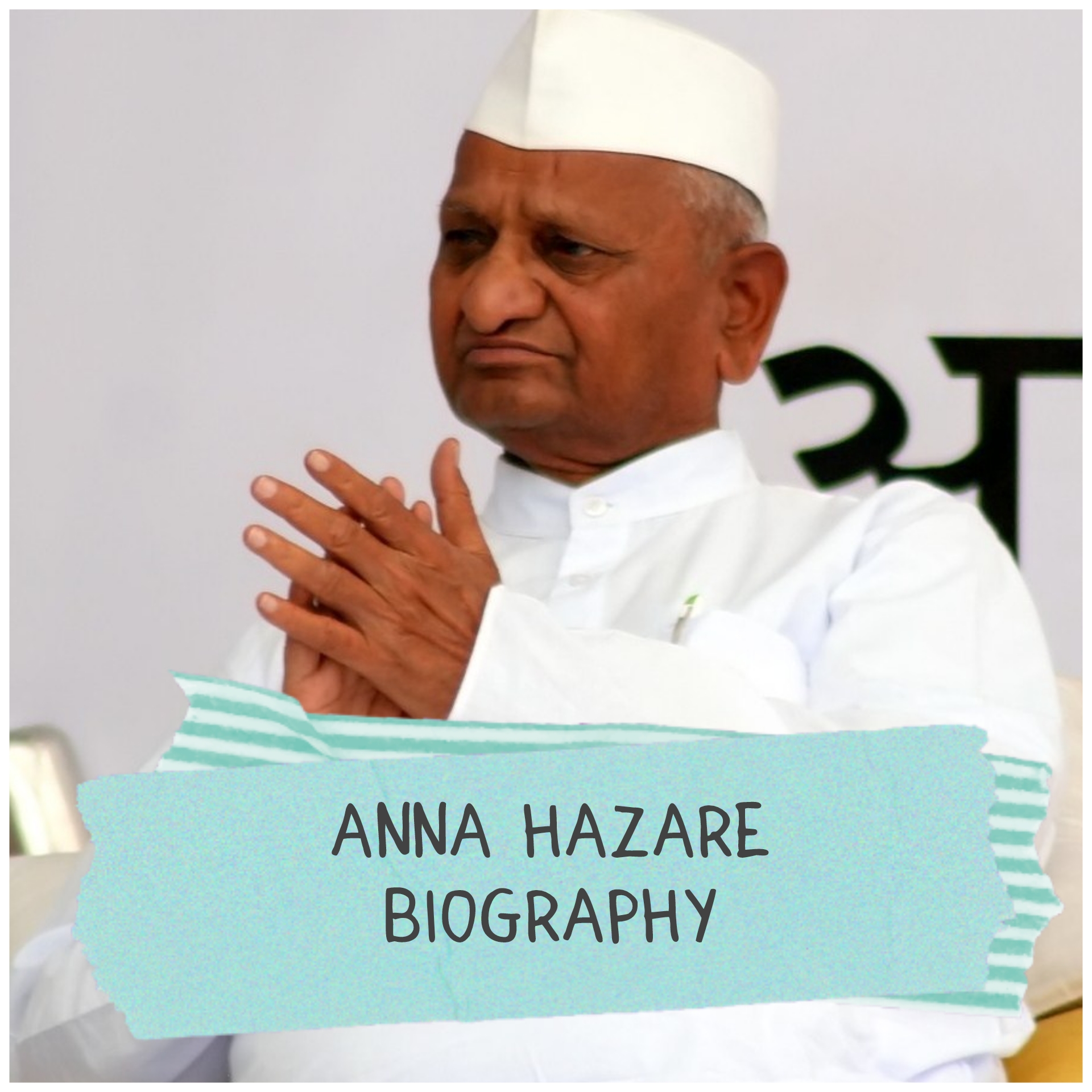
Anna Hazare, whose real name is Kisan Baburao Hazare, is an Indian social activist, anti-corruption campaigner, and rural development reformer. He is best known for transforming his village of Ralegan Siddhi in Maharashtra into a model of sustainable development through water conservation, community participation, and self-reliance. Over the years, he has become one of India’s most respected public figures because of his commitment to honesty, transparency, and public service.
Hazare first gained nationwide recognition through his campaigns against corruption in Maharashtra. His influence grew even further in 2011 when he led a nationwide movement demanding a stronger Lokpal law to fight corruption in public office. The peaceful protest attracted millions of supporters across India and made him a symbol of accountability and good governance. His work has earned him several national honours, including the Padma Shri and the Padma Bhushan.
Recently, Anna Hazare has returned to the spotlight after speaking out on issues affecting India. He has urged the government to resolve national concerns through peaceful dialogue and democratic discussion. Even in his late eighties, he continues to advocate for clean governance, social justice, and rural development. His lifelong dedication to public welfare has made his biography an inspiring story of leadership, sacrifice, and service.
Anna Hazare Early Life and Background
Anna Hazare was born as Kisan Baburao Hazare on June 15, 1937, in Bhingar, Ahmednagar district, Maharashtra, India. He was born into a poor farming family and spent his early years facing financial hardship. His father, Baburao Hazare, worked as an unskilled labourer, while his mother, Laxmibai Hazare, managed the family at home. Because of the family’s difficult economic situation, Anna’s childhood was marked by struggle and sacrifice.
Hazare attended school but was unable to continue beyond the seventh grade because his family could not afford his education. He later moved to Mumbai, where he lived with a relative and earned a living by selling flowers near Dadar railway station. The experience of working at a young age taught him discipline, responsibility, and the value of hard work. These early challenges shaped his determination to improve not only his own life but also the lives of others.
In 1960, Anna Hazare joined the Indian Army as a driver and served the country for about 15 years. During the Indo-Pakistani War of 1965, he survived an attack that claimed the lives of several fellow soldiers. The experience deeply changed his outlook on life and inspired him to dedicate himself to serving society. After reading the teachings of Mahatma Gandhi, Swami Vivekananda, and Vinoba Bhave, he decided to devote his life to rural development, social reform, and the fight against corruption.
Anna Hazare Education and Qualifications
Anna Hazare began his education in his hometown of Bhingar before continuing his studies after moving to Mumbai. However, due to severe financial difficulties faced by his family, he was forced to leave school after completing the seventh grade. Although his formal education ended early, he remained committed to learning throughout his life and believed that knowledge could be gained through experience, discipline, and continuous self-improvement.
After leaving school, Hazare focused on practical learning while working to support himself. During his service in the Indian Army, he developed leadership skills, discipline, and a strong sense of responsibility. He also spent much of his free time reading books on spirituality, ethics, and national development. The writings of Mahatma Gandhi, Swami Vivekananda, and Vinoba Bhave had a lasting influence on his thinking and helped shape his vision for public service and social reform.
Anna Hazare does not hold a university degree or advanced academic qualifications. Instead, his qualifications come from decades of hands-on experience in rural development, community leadership, water conservation, and anti-corruption activism. His practical knowledge and successful work in transforming Ralegan Siddhi into a model village have earned him national recognition and respect. His life demonstrates that dedication, integrity, and lifelong learning can have a greater impact than formal academic credentials alone.
Anna Hazare Career Journey and Achievements
Anna Hazare began his professional career by joining the Indian Army in 1960, where he served as a driver. During his 15 years of military service, he was posted to different parts of India and developed a reputation for discipline, dedication, and integrity. His experience during the Indo-Pakistani War of 1965, in which he narrowly survived an attack, became a turning point in his life. It inspired him to dedicate his future to serving society rather than pursuing personal success.
After retiring from the Army in 1975, Hazare returned to his village of Ralegan Siddhi in Maharashtra. At the time, the village faced severe drought, poverty, unemployment, and widespread alcoholism. He led community efforts to build check dams, improve water conservation, plant trees, and promote sustainable farming. Under his leadership, Ralegan Siddhi was transformed into one of India’s most successful model villages. The project attracted national and international attention and became an example of effective rural development.
Hazare later expanded his work beyond village development by campaigning against corruption in Maharashtra. He organised peaceful protests and hunger strikes that exposed corruption in government departments and pressured authorities to take action against several public officials. His commitment to transparency and accountability earned him widespread public support and established him as one of India’s leading social activists.
In 2011, Anna Hazare led one of the largest anti-corruption movements in India’s history. His hunger strike demanding the introduction of a stronger Lokpal Bill inspired millions of people across the country to join peaceful demonstrations. The movement brought corruption to the centre of national debate and encouraged greater public participation in governance. Although not all of his demands were fully achieved, the campaign had a lasting impact on India’s political and social landscape.
Throughout his career, Anna Hazare has remained committed to non-violent activism inspired by Mahatma Gandhi. He has continued to speak on issues such as electoral reform, government accountability, farmers’ welfare, and rural development. His lifelong service has earned him several prestigious honours, including the Padma Shri and the Padma Bhushan. Even in his late eighties, he continues to influence public policy discussions and inspire people through his dedication to honesty, simplicity, and public service.
Anna Hazare Personal Life and Family
Anna Hazare was born into the family of Baburao Hazare and Laxmibai Hazare in Maharashtra, India. His father worked as an unskilled labourer, while his mother cared for the family despite difficult financial circumstances. He grew up with several siblings in a humble household, where hard work, discipline, and perseverance became part of his daily life. These early family values later shaped his commitment to honesty, selflessness, and public service.
Anna Hazare has never married and has no wife, fiancée, or children. He made a personal decision to remain unmarried so he could devote his entire life to serving society. For decades, he has lived a simple lifestyle in Ralegan Siddhi, where he stays in a modest room near the Yadavbaba Temple. He follows a disciplined daily routine and has consistently avoided the comforts and privileges that often come with public recognition.
Family has remained an important influence throughout Hazare’s life, even though he chose not to establish a family of his own. He considers the people of Ralegan Siddhi and the wider Indian community as an extension of his family and has spent decades working to improve their quality of life. His dedication to rural development, anti-corruption campaigns, and community welfare reflects the values he learned from his parents and the sacrifices they made during his childhood.
Anna Hazare Age, Religion, Nationality, Height and Physical Appearance
Anna Hazare was born on June 15, 1937, in Bhingar, Ahmednagar district, Maharashtra, India. As of 2026, he is 89 years old. Despite his advanced age, he continues to participate in public discussions and social causes. His energy, discipline, and commitment to public service have remained consistent throughout his life.
Anna Hazare is an Indian citizen by nationality and follows Hinduism. His beliefs have been strongly influenced by the teachings of Mahatma Gandhi, Swami Vivekananda, and Vinoba Bhave. He is known for living a simple and disciplined life based on honesty, selflessness, and non-violence. These values have guided both his personal life and his decades-long career as a social activist.
Anna Hazare stands at approximately 5 feet 5 inches (165 cm) tall. He has a slim build, white hair, and dark brown eyes. He is best recognised for wearing a white Gandhi cap, a plain white kurta, and traditional Indian clothing that reflects his modest lifestyle. His simple appearance has become one of the defining symbols of his public image and lifelong commitment to serving the people.
Anna Hazare Net Worth
Anna Hazare has never focused on building personal wealth during his lifetime. Unlike many public figures, he has chosen a life of simplicity and has dedicated his career to social service rather than earning income from business or politics. As a former Indian Army serviceman and lifelong social activist, his financial resources have remained modest, reflecting his commitment to public welfare instead of personal gain.
Although Anna Hazare has not publicly disclosed his financial assets, there is no verified record showing that he owns significant wealth or luxury properties. Most estimates place his net worth at between US$50,000 and US$100,000. This estimate is based on his Army pension, modest personal assets, and the absence of commercial ventures or high-paying professional roles. He has also donated much of his personal property for community development and charitable causes.
Hazare continues to live a simple lifestyle in Ralegan Siddhi, Maharashtra, where he resides in a small room near the Yadavbaba Temple. He does not display expensive possessions or extravagant spending and has consistently encouraged honesty, selflessness, and responsible use of public resources. His greatest legacy is not financial wealth but the lasting impact of his work in rural development, anti-corruption advocacy, and social reform across India.
Awards and Achievements
Anna Hazare has received numerous awards and honours in recognition of his outstanding contributions to rural development, social reform, and the fight against corruption in India. His successful transformation of Ralegan Siddhi into a model village earned him national recognition and established him as one of the country’s most respected social activists. His work has inspired governments, community leaders, and development organisations across India.
In 1990, the Government of India honoured him with the Padma Shri, the country’s fourth-highest civilian award, for his contributions to social service. Two years later, he received the Padma Bhushan, India’s third-highest civilian award, in recognition of his continued efforts in rural development and public welfare. These prestigious honours remain among the most significant achievements of his lifelong career.
Apart from the Padma awards, Anna Hazare has received several other national and international recognitions. These include the Krishi Bhushan Award, the Integrity Award from Transparency International, and the Allard Prize for International Integrity. He has also been honoured by academic institutions and public organisations for his leadership, commitment to ethical governance, and lasting contribution to transparency, accountability, and community development.
Legacy
Anna Hazare’s greatest legacy is the transformation of Ralegan Siddhi from a drought-prone and impoverished village into one of India’s leading examples of sustainable rural development. Through water conservation, afforestation, community participation, and responsible resource management, he demonstrated that determined local leadership could bring lasting change. His model has inspired villages across India to adopt similar approaches to development and self-reliance.
Hazare also left a lasting mark on India’s fight against corruption. His peaceful protests and hunger strikes encouraged millions of people to demand greater transparency and accountability from public officials. The nationwide anti-corruption movement he led in 2011 became one of the most influential public campaigns in modern Indian history. It increased public awareness of governance issues and encouraged stronger discussions about ethics in public office.
Beyond his campaigns and achievements, Anna Hazare is remembered for his honesty, discipline, and simple way of life. He chose public service over personal wealth and remained committed to the principles of non-violence, integrity, and social justice throughout his life. His influence continues to inspire activists, community leaders, and young people who believe that dedication and selfless service can create meaningful and lasting change in society.
Conclusion
Anna Hazare’s life is a remarkable example of selfless service, integrity, and dedication to the public good. From his humble beginnings and service in the Indian Army to becoming one of India’s most respected social activists, he has consistently worked to improve the lives of others through rural development and the fight against corruption. His leadership, simple lifestyle, and unwavering commitment to honesty have earned him national and international recognition. Even in his late eighties, he continues to inspire people through his advocacy for transparency, good governance, and social justice, making his legacy one of the most influential in modern India.
Frequently Asked Questions (FAQs) About Anna Hazare
Who is Anna Hazare?
Anna Hazare, born Kisan Baburao Hazare, is an Indian social activist, anti-corruption campaigner, and rural development reformer. He is best known for transforming Ralegan Siddhi into a model village and leading India’s 2011 anti-corruption movement.
How old is Anna Hazare?
Anna Hazare was born on June 15, 1937. As of 2026, he is 89 years old.
What is Anna Hazare famous for?
Anna Hazare is famous for his anti-corruption campaigns, his leadership during the 2011 Lokpal movement, and his successful rural development projects in Ralegan Siddhi, Maharashtra.
Is Anna Hazare married?
No. Anna Hazare has never married. He chose to remain unmarried and dedicated his life to social service and public welfare.
What is Anna Hazare’s real name?
Anna Hazare’s real name is Kisan Baburao Hazare.
What is Anna Hazare’s religion?
Anna Hazare follows Hinduism and has been deeply influenced by the teachings of Mahatma Gandhi, Swami Vivekananda, and Vinoba Bhave.
What is Anna Hazare’s nationality?
Anna Hazare is an Indian national.
What is Anna Hazare’s net worth?
Anna Hazare’s estimated net worth is between US$50,000 and US$100,000. He lives a simple lifestyle and has devoted most of his life to public service rather than building personal wealth.
What awards has Anna Hazare received?
Anna Hazare has received several honours, including the Padma Shri (1990), the Padma Bhushan (1992), the Krishi Bhushan Award, the Integrity Award from Transparency International, and the Allard Prize for International Integrity.
Why is Anna Hazare trending in 2026?
Anna Hazare is trending in 2026 because of his public statements urging peaceful dialogue over national issues, including the unrest linked to the NEET controversy and his calls for discussions on matters of public interest.