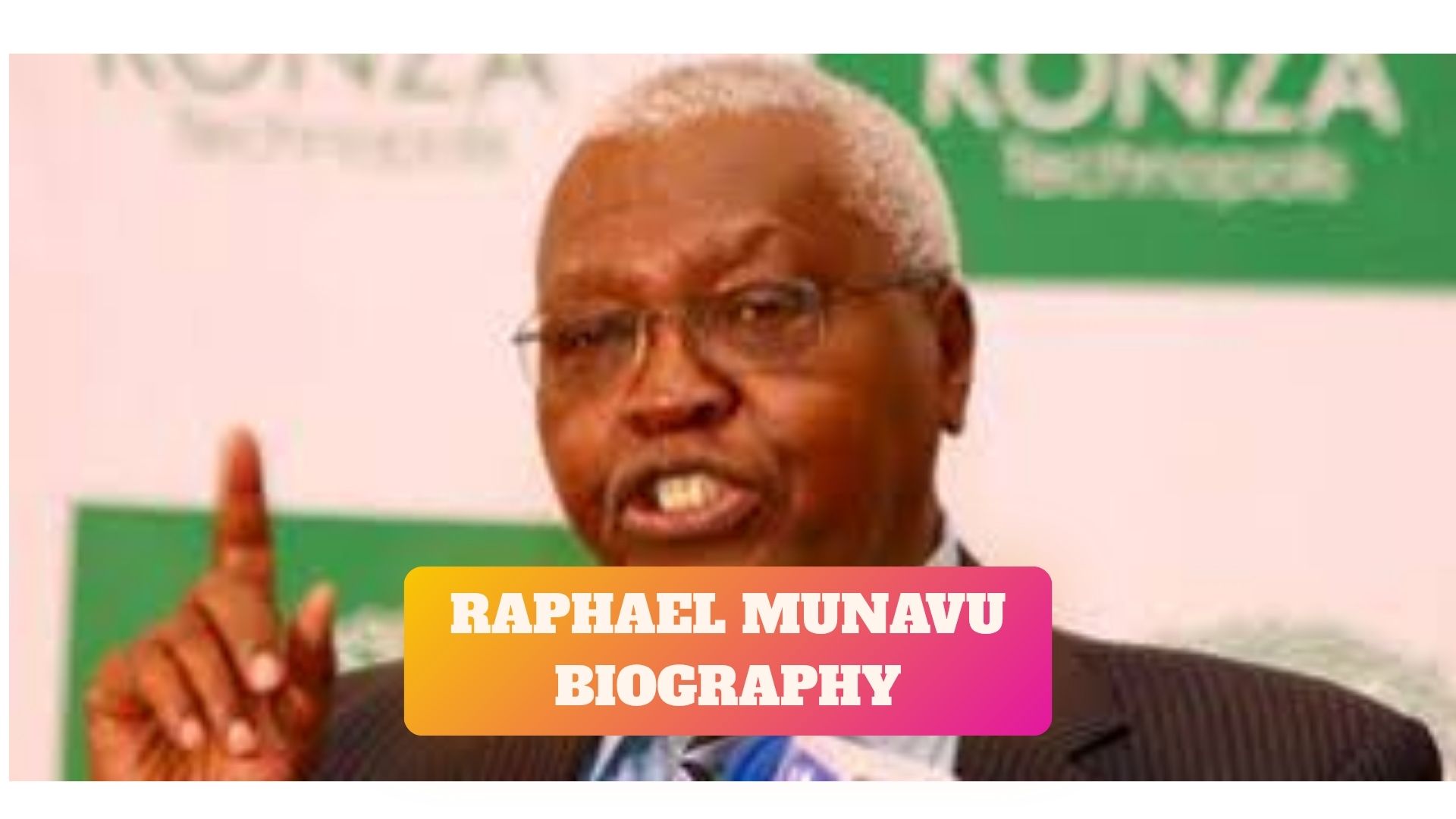
Professor Raphael Munavu was one of Kenya’s most distinguished scholars, education administrators, and public servants.
A Professor Emeritus of Chemistry at the University of Nairobi, he dedicated over four decades of his life to transforming higher education, shaping national science policy, and mentoring generations of students — including President William Ruto, whom he taught at the University of Nairobi.
Prof Munavu rose to national and continental fame through his prolific leadership in universities and state institutions. He gained even wider recognition in his later years when he was appointed to chair the Presidential Working Party on Education Reforms in September 2022, tasked with reviewing Kenya’s Competency-Based Curriculum (CBC). His death on April 26, 2026, triggered an outpouring of tributes from Kenya’s highest offices down to ordinary citizens who had experienced his impact firsthand.
He is best known for his quiet but transformative leadership — being the kind of person who showed up and left institutions permanently changed. In the words of former Vice President Kalonzo Musyoka, Prof Munavu “brought rigour, integrity, and an unshakeable belief that Kenya’s future lay in the quality of its education.”
Profile
| Full Name | Professor Raphael Munavu |
| Born | c. 1946 |
| Birthplace | Machakos County, Kenya |
| Nationality | Kenyan |
| Occupation | Professor Emeritus of Chemistry; University Administrator; Public Policy Leader |
| Religion | Christian |
| Net Worth | Not publicly disclosed |
Early Life
Professor Raphael Munavu was born in Machakos County, in the Ukambani region of Kenya. He grew up during the formative years of Kenya’s independence — a period that profoundly shaped his lifelong conviction that education was the bedrock of national development. From an early age, he showed exceptional intellectual curiosity, particularly in the sciences. His family background in Machakos County instilled in him values of hard work and community service. He was widely described as a lover of Kamba traditions, and he never lost his connection to his roots despite reaching the highest echelons of Kenyan academia.
Education
Prof Munavu’s educational journey took him to the United States, where he pursued advanced studies in chemistry. He earned a Bachelor of Arts degree from Kalamazoo College, Michigan, between 1967 and 1970. He then proceeded to Wayne State University, Detroit, where he obtained his Master of Science degree between 1970 and 1972. He completed his doctoral studies at the University of Detroit, earning a PhD in Organic, Environmental and Industrial Chemistry in 1975. He later received an honorary Doctorate of Humane Letters (D.Litt) from Kalamazoo College in 2001 and an honorary Doctor of Science degree from Laikipia University in 2013.
Career
Upon returning to Kenya in 1976, Prof Munavu joined the University of Nairobi as a lecturer in the Department of Chemistry. Over the following decades, he rose steadily through academic ranks. He served as Dean of the Faculty of Science (1987–1990), then as the founding Principal of Laikipia College of Egerton University (1990–1992), followed by a stint as Vice-Chancellor of Egerton University (1992–1994). He then returned to UoN as Deputy Vice-Chancellor (Administration and Finance) (1994–1998), before becoming Vice-Chancellor of Moi University from 1998 to 2002.
Beyond the university, he served as Chairman of the Kenya National Examinations Council (KNEC) for ten years (2000–2010), and as Chairman of the Kenya National Academy of Sciences (KNAS) for a remarkable 19 years (2002–2021). He also served as a Commissioner at the Commission on Revenue Allocation, Chancellor of Laikipia University, and Chairman of the Board of the Konza Technopolis Development Authority, helping drive Kenya’s ambition to become Africa’s Silicon Savannah. In September 2022, President Ruto appointed him to chair the Presidential Working Party on Education Reform, through which he led nationwide consultations and delivered a landmark report in 2023 recommending a revamp of the CBC framework.
Awards & Nominations
- Order of the Grand Warrior (OGW) — 1994
- Elder of the Burning Spear (EBS) — 2001
- Honorary Doctorate of Humane Letters (D.Litt), Kalamazoo College (USA) — 2001
- Honorary Doctor of Science, Laikipia University — 2013
- Chancellor’s Award for Young University (KVASU) — 2016 (under his stewardship)
Social Media
Prof Raphael Munavu did not maintain a notable public social media presence. His influence was built through academic publications, institutional leadership, and direct mentorship rather than digital platforms.
Personal Life
Prof Munavu was widely described as a private, humble man who shunned the spotlight. He was celebrated as a lover of Kamba traditions and heritage. He was reportedly married and leaves behind family in Machakos County. He passed away on April 26, 2026, while receiving treatment at a Nairobi hospital. The news triggered tributes from President William Ruto, former VP Kalonzo Musyoka, Machakos Governor Wavinya Ndeti, and institutions across Kenya. At the time of his death, he was approximately 80 years old and had remained academically active well into old age — a testament to his enduring passion for education.
Net Worth
Prof Raphael Munavu’s net worth was never publicly disclosed. His income was primarily derived from academic salaries, institutional leadership stipends, and national service roles. His wealth was considered modest relative to the enormous public impact he created throughout his career.
FAQs
Q: When did Prof Raphael Munavu die?
Q: Which university did Prof Munavu serve as Vice-Chancellor?
Q: Did Prof Munavu teach President Ruto?
Q: What was Prof Munavu’s role in education reform?
Conclusion
Prof Raphael Munavu was not merely an academic — he was an architect of Kenya’s intellectual infrastructure. His life, spanning chemistry laboratories, boardrooms, and national policy hearings, represents one of the most complete expressions of public service in East African history. Though he is gone, the institutions he built, the students he shaped, and the policies he championed will continue to define Kenya’s educational landscape for decades to come.