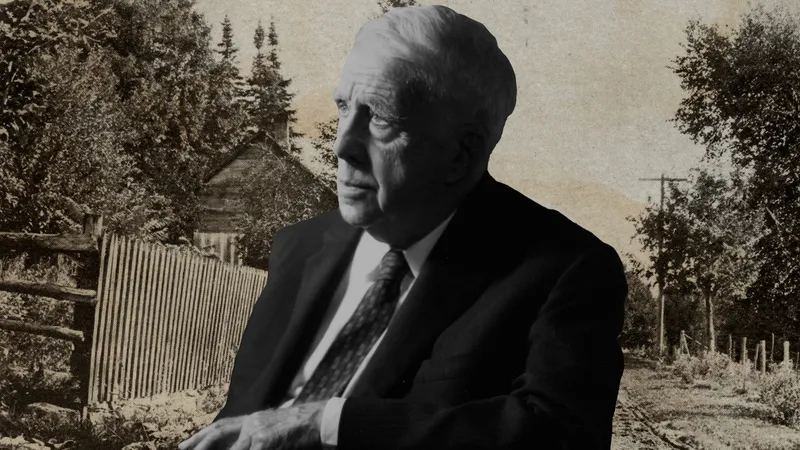
Robert Lee Frost was one of the most celebrated and beloved American poets of the 20th century.
Renowned for his masterful command of colloquial speech, his deeply philosophical explorations of everyday human experiences, and his evocative depictions of rural New England life, Frost became one of the most widely read and studied poets in the English language.
A four-time winner of the Pulitzer Prize for Poetry, a record virtually unmatched in American literature, he was a figure of immense cultural stature whose works continue to be studied in classrooms and quoted in public discourse around the world.
Profile
| Full Name | Robert Lee Frost |
| Born | March 26, 1874 |
| Died | January 29, 1963 (aged 88) |
| Birthplace | San Francisco, California, USA |
| Nationality | American |
| Occupation | Poet, Playwright, Author, Teacher |
| Height | 5 ft 10 in (1.78 m) |
| Parents | William Prescott Frost Jr. (journalist), Isabelle Moodie (teacher) |
| Spouse | Elinor Miriam White (married 1895; died 1938) |
| Children | 6 children: Lesley, Carol, Elliott, Marjorie, Irma, Elinor Bettina |
| Net Worth | $5–8 million (at time of death) |
Early Life
Robert Lee Frost was born on March 26, 1874, in San Francisco, California. His father, William Prescott Frost Jr., was a journalist and a graduate of Harvard, while his mother, Isabelle Moodie, was a Scottish immigrant who worked as a teacher. The family’s time in San Francisco was marked by his father’s struggles with alcoholism and chronic ill health. When his father died of tuberculosis in 1885, Robert was just 11 years old. His mother moved the family to Lawrence, Massachusetts, where she had relatives, a move that would prove formative, as the landscape of New England would eventually become inseparable from Frost’s poetic identity.
Growing up in Massachusetts, Robert attended Lawrence High School, where he developed a deep love of literature and began writing poetry. He graduated as co-valedictorian alongside Elinor White, whom he would later marry. Even as a teenager, his literary gifts were evident. He showed a fascination with nature, solitude, and the rhythms of everyday rural life that would define his poetry for the rest of his life.
Education
Robert Frost enrolled at Dartmouth College in 1892 but left after just a few months, finding academic life unsatisfying. He later enrolled at Harvard University in 1897 as a special student, studying Latin, Greek, philosophy, and English literature. He attended Harvard for two years before leaving again without completing a degree, due in part to health concerns. Despite never earning a college degree, Frost became one of the most honored academic figures in America, eventually receiving over 40 honorary degrees from universities including Harvard, Dartmouth, and Oxford.
Career
Robert Frost’s path to literary success was long and marked by significant struggle. He worked as a teacher, farmer, and laborer while writing poetry and facing repeated rejections from American publishers. He married Elinor White in 1895 and together they had six children, though the family faced considerable tragedy, several of his children died young or struggled with serious mental health challenges. His wife Elinor died in 1938, a loss that deeply affected him for the rest of his life.
Frustrated by his failure to gain recognition in America, Frost made the bold decision in 1912 to move his family to England. The move proved to be the turning point of his career. In England, he connected with influential literary figures and gained the attention and encouragement of poets like Ezra Pound. In 1913, his debut poetry collection A Boy’s Will was published in London, followed in 1914 by North of Boston — a collection that included what would become one of his most famous works, Mending Wall. Both collections were warmly received by the British literary establishment.
When Frost returned to the United States in 1915, his reputation had preceded him. American publishers who had previously rejected him now eagerly published his work, and he was quickly recognized as one of the most important voices in American poetry. He joined the faculty of Amherst College and later held teaching positions at the University of Michigan and Dartmouth College. His work as a teacher and lecturer kept him in close contact with new generations of writers and readers throughout his long life.
His major collections, including Mountain Interval (1916), New Hampshire (1923), West-Running Brook (1928), and A Further Range (1936), won him four Pulitzer Prizes and established him as the preeminent American poet of his era. He became the first person to read a poem at a U.S. presidential inauguration when he recited The Gift Outright at President John F. Kennedy’s inauguration in January 1961, a historic moment watched by millions. In 1960, he was awarded the Congressional Gold Medal by President Eisenhower for his extraordinary contributions to American literature.
Awards & Nominations
- Pulitzer Prize for Poetry – 1924 (New Hampshire)
- Pulitzer Prize for Poetry – 1931 (Collected Poems)
- Pulitzer Prize for Poetry – 1937 (A Further Range)
- Pulitzer Prize for Poetry – 1943 (A Witness Tree)
- Congressional Gold Medal – 1960
- Bollingen Prize in Poetry – 1963
- Robert Frost Medal (named in his honor by the Poetry Society of America)
- Emerson-Thoreau Medal
- Over 40 honorary degrees from universities worldwide
Social Media
Robert Frost lived and died in an era before social media. He passed away on January 29, 1963. There are, however, numerous official memorial pages and fan accounts on platforms like Instagram, Twitter, and Facebook dedicated to sharing his poetry and celebrating his legacy.
Personal Life
Robert Frost married his high school co-valedictorian and childhood sweetheart, Elinor Miriam White, in December 1895. Together they had six children: Lesley, Carol, Elliott, Marjorie, Irma, and Elinor Bettina. The family was marked by profound tragedy. Their son Elliott died in infancy; their son Carol committed suicide in 1940; their daughter Marjorie died following childbirth complications in 1934; and another daughter, Elinor Bettina, died just days after birth. His wife Elinor died of heart failure in 1938. These successive losses left deep psychological scars on Frost and are believed to have shaped the elegiac undertones that run through much of his later poetry.
Despite these personal tragedies, Frost maintained an active public life well into his 80s. He was a deeply private man who preferred the simple life of his farms in New Hampshire and Vermont to the social whirl of literary celebrity. He was known for his dry wit, his love of walking in nature, and his passionate engagement with ideas and with younger poets. He died in Boston on January 29, 1963, at the age of 88, following complications from a prostate surgery.
Net Worth
At the time of his death in 1963, Robert Frost’s estimated net worth was approximately $5–8 million in historical terms. His income was derived primarily from the sale and royalties of his poetry collections, his teaching positions at prestigious universities, Pulitzer Prize awards, public lectures and readings, and various grants and honors. For a poet, a profession rarely associated with significant financial reward, this was a remarkable accumulation of wealth and a testament to his extraordinary commercial as well as critical success.
Major Works
- A Boy’s Will (1913)
- North of Boston (1914) – includes Mending Wall
- Mountain Interval (1916) – includes The Road Not Taken
- New Hampshire (1923) – includes Stopping by Woods on a Snowy Evening
- West-Running Brook (1928)
- A Further Range (1936)
- A Witness Tree (1942)
- In the Clearing (1962)
- Notable individual poems: Fire and Ice, Birches, After Apple-Picking, The Gift Outright
FAQs
Who is Robert Frost?
Robert Frost was one of the most celebrated American poets of the 20th century, best known for poems like The Road Not Taken, Stopping by Woods on a Snowy Evening, and Mending Wall.
How many Pulitzer Prizes did Robert Frost win?
He won four Pulitzer Prizes for Poetry, in 1924, 1931, 1937, and 1943.
When did Robert Frost die?
He died on January 29, 1963, at the age of 88.
What is Robert Frost’s most famous poem?
The Road Not Taken (1916) is his most widely read and quoted poem.
Conclusion
Robert Frost’s enduring legacy lies in his extraordinary ability to find profound philosophical meaning in the simple landscapes and everyday experiences of American rural life.
Through deceptively plain language and masterful use of meter and form, he created poetry that speaks across generations and cultures.
Four Pulitzer Prizes, a Congressional Gold Medal, and a place at one of history’s most iconic presidential inaugurations confirmed his stature as one of America’s greatest literary figures.
More than six decades after his death, his poems continue to be read, studied, memorized, and loved by millions around the world.