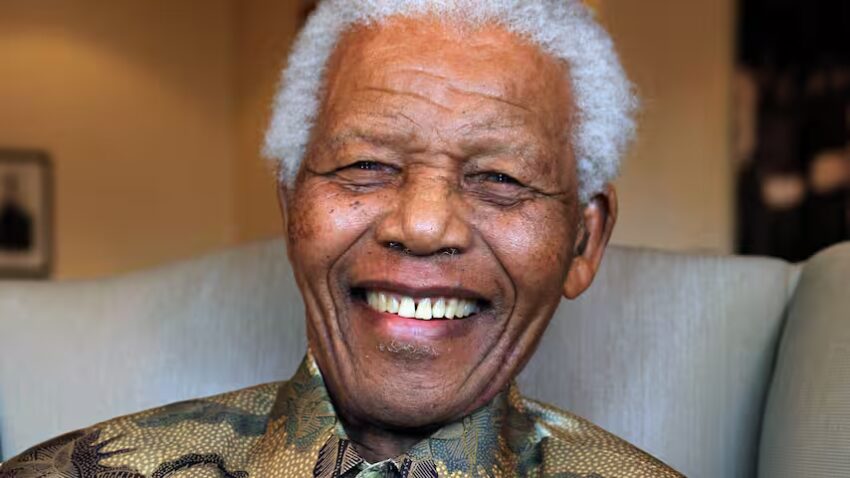
Nelson Rolihlahla Mandela was one of the most extraordinary human beings in the history of the modern world.
An anti-apartheid revolutionary, lawyer, political leader, and philanthropist, he served as the first democratically elected President of South Africa from 1994 to 1999, becoming the country’s first black head of state.
Imprisoned for 27 years by the apartheid government for his activism, he emerged not with bitterness but with a philosophy of reconciliation, forgiveness, and peace that astonished the world and transformed South Africa’s future.
A Nobel Peace Prize laureate and recipient of over 260 awards across four decades, Mandela is universally regarded as one of the greatest moral leaders of the 20th century.
Profile
| Full Name | Nelson Rolihlahla Mandela |
| Born | July 18, 1918 |
| Died | December 5, 2013 (aged 95) |
| Birthplace | Mvezo, Umtata, Eastern Cape, South Africa |
| Nationality | South African |
| Occupation | Lawyer, Politician, Anti-Apartheid Activist, President |
| Parents | Gadla Henry Mphakanyiswa (father), Nosekeni (mother) |
| Spouse | Evelyn Ntoko Mase (1944–1958); Winnie Madikizela (1958–1996); Graça Machel (1998–2013) |
| Children | 6 biological children: Madiba Thembekile, Makaziwe, Makgatho, Makaziwe (2nd), Zenani, Zindziswa |
| Net Worth | $1–10 million at time of death |
Early Life
Nelson Rolihlahla Mandela was born on July 18, 1918, in the small village of Mvezo, in Umtata, which is in what is today the Eastern Cape Province of South Africa. He was born into the royal family of the Thembu people, a Xhosa-speaking ethnic group. His father, Gadla Henry Mphakanyiswa, was a chief of the Mvezo village and a counselor to the Thembu kings, while his mother, Nosekeni, was his father’s third wife in a polygamous household. The name Rolihlahla, given to him at birth, translates from the Xhosa as “pulling the branch of a tree”, colloquially interpreted as “troublemaker”, a name that would prove prescient given his life’s revolutionary course.
Nelson was given the English name “Nelson” by a Methodist school teacher when he began his formal schooling at age seven, a common practice in South African schools of that era. His father died when he was just nine years old, and thereafter, he was taken under the guardianship of Chief Jongintaba Dalindyebo, the regent of the Thembu people, who saw to his education and upbringing.
Education
Nelson Mandela received his early schooling at local mission schools and completed his secondary education at Clarkebury Methodist High School, one of the largest Western-styled institutions for African students in the Eastern Cape. He then attended Healdtown, a Wesleyan Methodist boarding school of some repute, before enrolling at the University of Fort Hare in 1939 to study for a Bachelor of Arts degree. At Fort Hare, he studied English, anthropology, politics, and native administration, participating actively in student life through ballroom dancing, drama, and teaching Bible studies. However, he was suspended from Fort Hare after participating in a boycott over the poor quality of student food.
He then moved to Johannesburg and enrolled at the University of South Africa (UNISA) to complete his Bachelor of Arts degree by correspondence, which he eventually achieved. He then enrolled at the University of the Witwatersrand to pursue a law degree, as the only black student in his class, he was a frequent target of racism. While he did not complete his law degree formally until later in life, he was able to article as a law clerk and eventually co-founded South Africa’s first black law firm, Mandela and Tambo, with Oliver Tambo in 1952.
Career
Nelson Mandela’s career is inseparable from the political history of South Africa. After arriving in Johannesburg in the early 1940s, he became increasingly involved in the African National Congress (ANC), the political organization dedicated to ending the racial segregation and discrimination that had been institutionalized in South Africa’s political system and which would be formalized as apartheid from 1948. He joined the ANC Youth League in 1944 and rapidly rose through its ranks.
In 1952, Mandela played a leading role in the ANC’s Defiance Campaign against unjust apartheid laws, during which thousands of volunteers deliberately violated apartheid regulations. He was arrested for the first time as a result and given a suspended sentence. In 1955, he helped draft the Freedom Charter, a statement of core principles for a post-apartheid South Africa. In 1956, he was among 156 activists arrested on charges of high treason. Though the Treason Trial lasted until 1961 and all accused were eventually acquitted, it consumed years of his life.
A decisive turning point came in March 1960 with the Sharpeville Massacre, in which South African police killed 69 unarmed Black protesters. Following this atrocity, the ANC was banned. Mandela and other leaders concluded that nonviolent resistance alone was insufficient, and in 1961 he co-founded Umkhonto we Sizwe (MK, “Spear of the Nation”), the ANC’s armed wing, becoming its commander. MK engaged in acts of sabotage against government infrastructure, carefully avoiding actions that would cause civilian casualties.
Mandela was arrested in August 1962 and sentenced to five years in prison for incitement and leaving the country illegally. While in prison, he was charged in the Rivonia Trial of 1964 alongside other ANC leaders for sabotage and conspiracy to overthrow the government. In a historic courtroom statement, rather than denying the charges, he explained why he and his colleagues believed they had no choice but to resist apartheid by force. He was sentenced to life imprisonment and sent to Robben Island, where he would spend the next 18 years in a small cell, engaging in hard labor, before being transferred to Pollsmoor Prison and later to Victor Verster Prison.
During his 27 years of imprisonment, Mandela became the most powerful symbol of anti-apartheid resistance worldwide. International campaigns demanding his release grew in intensity throughout the 1970s and 1980s. Finally, on February 11, 1990, South African President F.W. de Klerk ordered his release, a moment broadcast live around the world and celebrated across the globe. Mandela emerged from prison without bitterness, committing himself immediately to a peaceful, negotiated transition to democracy in South Africa.
After his release, Mandela led complex and often dangerous negotiations with the apartheid government to end white minority rule and establish a multiracial democracy. These negotiations, which required extraordinary political skill, personal courage, and a profound capacity for forgiveness, culminated in South Africa’s first fully democratic elections in April 1994. Nelson Mandela won the presidency with 62.65% of the vote, becoming South Africa’s first Black president.
As President from 1994 to 1999, Mandela’s administration worked to dismantle the structural legacy of apartheid, promote racial reconciliation through the Truth and Reconciliation Commission (chaired by Archbishop Desmond Tutu), and begin the work of addressing South Africa’s deep inequalities. He served only one presidential term, honoring his commitment to democratic norms. After leaving office in 1999, he remained active in global diplomacy and philanthropic work until the final years of his life.
Nelson Mandela passed away on December 5, 2013, in Johannesburg, South Africa, following a prolonged respiratory illness. He was 95 years old. He was buried in Qunu in the Eastern Cape Province, in accordance with his wishes. The world mourned his passing as that of a truly irreplaceable human being.
Awards & Nominations
- Nobel Peace Prize – 1993 (shared with F.W. de Klerk)
- Sakharov Prize for Freedom of Thought – 1988
- Presidential Medal of Freedom (USA) – 2002
- Order of Merit (UK) – 1995
- Bharat Ratna (India) – 1990
- Lenin Peace Prize (Soviet Union) – 1990
- Nishan-e-Pakistan
- More than 260 awards received over 40 years
- Mandela Day (July 18) declared by the United Nations
Social Media
Nelson Mandela passed away in 2013. His official legacy is maintained online through the Nelson Mandela Foundation’s website at nelsonmandela.org and through official accounts on social media platforms including Twitter/X (@NelsonMandela) and Facebook, which continue to share his words, legacy, and ongoing foundation work with millions of followers worldwide.
Personal Life
Nelson Mandela was married three times. His first marriage was to Evelyn Ntoko Mase in 1944; together they had three children before divorcing in 1958. His second and most celebrated marriage was to Winnie Madikizela in 1958, with whom he had two daughters, Zenani and Zindziswa. This marriage endured through his imprisonment but ultimately ended in separation in 1992 and divorce in 1996, after Winnie Mandela’s controversial activities during the apartheid years became a source of significant tension. His third marriage was to Graça Machel, the widow of Mozambican President Samora Machel, on his 80th birthday, July 18, 1998. They remained together until his death. Mandela was known as “Madiba”, his Thembu clan name, a term of deep affection and respect used throughout South Africa and the world.
Net Worth
Nelson Mandela’s estimated net worth at the time of his death was approximately $1–10 million. While this figure is modest compared to many other world leaders, it is consistent with Mandela’s personal philosophy. He donated generously to charitable causes throughout his life and lived with remarkable humility given his global stature. His primary income in later years came from royalties from his internationally bestselling 1994 autobiography Long Walk to Freedom, his presidential salary, and international speaking engagements. He also established the Nelson Mandela Foundation, which continues to carry his charitable work forward.
FAQs
Who was Nelson Mandela?
Nelson Mandela was a South African anti-apartheid revolutionary and politician who served as South Africa’s first democratically elected Black president from 1994 to 1999.
How long was Nelson Mandela in prison?
He was imprisoned for 27 years, from 1964 to 1990.
What did Nelson Mandela win the Nobel Prize for?
He won the Nobel Peace Prize in 1993, shared with F.W. de Klerk, for their work to peacefully end apartheid and establish democracy in South Africa.
When did Nelson Mandela die?
He died on December 5, 2013, at the age of 95.
What does “Madiba” mean?
Madiba is Mandela’s Thembu clan name, and it became a widely used term of deep affection and respect for him throughout South Africa and the world.
Conclusion
Nelson Mandela’s life was the embodiment of humanity’s highest aspirations: the capacity for courage in the face of overwhelming oppression, the power of forgiveness over bitterness, and the possibility of peaceful transformation even in the most divided societies.
From the royal kraal of the Thembu people to a prison cell on Robben Island, to the presidency of a liberated South Africa, his journey touched every corner of the human experience.
More than a decade after his death, his name remains synonymous worldwide with justice, dignity, and the unbreakable human spirit. He is, and will remain, Madiba, a father not just to South Africa, but to all of humanity.