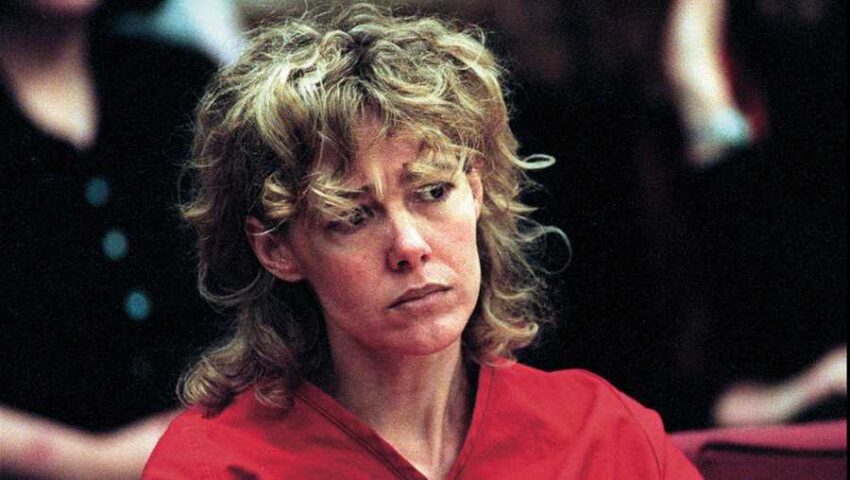
Mary Kay Letourneau was an American elementary school teacher who became the subject of one of the most controversial and extensively covered criminal cases in modern American history.
In 1996, she sexually abused her 12-year-old student Vili Fualaau, was convicted of child rape, served over seven years in prison, and upon her release married her victim.
Her story became a flashpoint in debates about statutory rape, double standards in gender and sentencing, and the nature of predatory behaviour in positions of trust. She died of colon cancer on July 6, 2020, at the age of 58.
Profile
| Full Name | Mary Katherine Fualaau (née Schmitz, previously Letourneau) |
| Born | January 30, 1962 |
| Birthplace | Tustin (Orange County), California, USA |
| Nationality | American |
| Occupation | Teacher (former), Paralegal (post-prison) |
| Spouses | Steve Letourneau (married 1984, divorced 1999); Vili Fualaau (married 2005, separated 2019) |
| Children | Six total: four with Steve Letourneau; two daughters (Audrey and Georgia) with Vili Fualaau |
| Conviction | Two counts of second-degree rape of a child (pleaded guilty 1997) |
| Sentence | 7½ years in prison (served in full after parole violation) |
| Date of Death | July 6, 2020 (aged 58) |
| Cause of Death | Colon cancer |
Early Life
Mary Katherine Schmitz was born on January 30, 1962, in Tustin, California. She was the fourth child and first daughter of John G. Schmitz — a conservative Republican college professor and US Congressman, and his devoutly Roman Catholic wife, Mary Schmitz. Her upbringing was strictly religious. After high school, she attended Arizona State University, where she met classmate Steve Letourneau; they married in 1984 after she became pregnant. She later completed her teacher training, earning her certification from Seattle University.
Career and Crime
In 1989, Mary Kay Letourneau took a position teaching at Shorewood Elementary School in Burien, Washington. She was regarded by colleagues and parents as an enthusiastic, dedicated teacher. She first met Vili Fualaau when he was in her second-grade class, recognising his artistic gifts and taking an interest in mentoring him. By the time he was assigned to her sixth-grade class in 1996, their relationship had crossed into sexual abuse. The criminal relationship began in 1996, when Fualaau was 12 and Letourneau was 34, married, and the mother of four children. In June 1996, police discovered the pair together in a van in the early morning hours. Letourneau falsely told officers that Fualaau was 18.
The case became public in February 1997 when Steve Letourneau discovered letters Mary Kay had written to Fualaau. She was arrested, and in August 1997 she pleaded guilty to two counts of second-degree rape of a child. She was sentenced to 7½ years in prison, but the sentence was suspended on the condition that she have no contact with Fualaau. She violated this condition almost immediately, police found her and Fualaau together in a car just six weeks after her release. She was returned to prison to serve her full sentence, and by then had already given birth to her first child by Fualaau while out on parole. A second daughter was born while Fualaau, then a teenager, raised both children. She was released from prison in August 2004 and was required to register as a sex offender.
Marriage to Vili Fualaau
After her release, Fualaau, by then a 21-year-old adult, had the no-contact order removed, and the two resumed their relationship. They married on May 20, 2005, in a ceremony outside Seattle that attracted enormous media attention. Their marriage lasted until Fualaau filed for legal separation in 2017; the divorce was finalised in 2019. Despite the divorce, Fualaau returned to be by Letourneau’s side during her final illness in 2020. Her attorney confirmed that Fualaau had “moved back from California, gave up his life there, and for the last two months of Mary’s life he stood by her 24/7 taking care of her.”
Death and Final Reflections
Mary Kay Letourneau died on July 6, 2020, at her home near Seattle, from complications of colon cancer. She was 58 years old. In her final months, according to friends, she expressed deep remorse for her actions: “She understood on a very deep level that she had really made a mess of her life and the lives of many other people back in 1996.” She reportedly apologised to many people before her death. Vili Fualaau was at her bedside when she passed.
Controversy and Legacy
Mary Kay Letourneau’s case remains deeply controversial. Child protection advocates emphasise that she committed child rape, an abuse of power and trust, and that Fualaau was a child who could not legally consent to a sexual relationship with an adult authority figure. Some societal commentators have argued that her case received comparatively lighter treatment than male perpetrators of equivalent crimes, reflecting gender bias in public perception of female sex offenders. Her story has been the subject of multiple documentaries, books, and television productions.
Conclusion
Mary Kay Letourneau’s life was ultimately a story of destruction, of the children she left with their father when she was imprisoned, of the boy she abused, and of whatever version of herself she might have been had she made different choices. Her case remains a reminder of the irreversible damage done when adults in positions of trust betray that trust in the most fundamental way possible.