Who Is Lionel Messi?
There are athletes, and then there is Lionel Messi. In a sport played by billions and watched by billions more, the name Messi occupies a category of its own — a singular fusion of genius, humility, and relentless achievement that has redefined what is possible on a football pitch. The Lionel Messi biography is not merely the story of a great footballer; it is the story of a frail boy from Argentina who overcame a debilitating medical condition, crossed an ocean at age thirteen, and went on to become the most decorated footballer in the history of the beautiful game.
Lionel Andrés Messi, born on June 24, 1987 in Rosario, Argentina, currently plays as a forward and captain for Inter Miami CF in Major League Soccer (MLS) and leads the Argentina national team. As of 2026, he holds eight Ballon d’Or awards — more than any player in history — and has scored over 900 career goals across all competitions. His 2022 FIFA World Cup victory with Argentina in Qatar is widely regarded as the crowning moment of his career and cemented his status as the Greatest of All Time (GOAT).
This comprehensive Lionel Messi biography covers every dimension of his life: his humble beginnings in Rosario, his development at FC Barcelona’s legendary La Masia academy, his record-breaking club career, his turbulent but triumphant international journey, his love story with wife Antonela Roccuzzo, his philanthropic endeavours, and his continued excellence in the United States. Whether you are a lifelong fan or discovering his story for the first time, this article will give you a complete and accurate picture of the man the world calls the GOAT.
Lionel Messi Quick Profile at a Glance
| Full Name | Lionel Andrés Messi |
| Date of Birth | June 24, 1987 |
| Age (2026) | 38 years old |
| Place of Birth | Rosario, Santa Fe Province, Argentina |
| Nationality | Argentine (also holds Spanish citizenship) |
| Height | 1.70 m (5 ft 7 in) |
| Position | Forward |
| Current Club | Inter Miami CF (Major League Soccer) |
| National Team | Argentina (Captain) |
| Wife | Antonela Roccuzzo (married June 30, 2017) |
| Children | Thiago (b. 2012), Mateo (b. 2015), Ciro (b. 2018) |
| Ballon d’Or Awards | 8 (2009, 2010, 2011, 2012, 2015, 2019, 2021, 2023) |
| Career Goals | 900+ (as of March 2026) |
| Major Titles | 46 team trophies (most in professional football history) |
| Net Worth (2026) | Approximately $1.1 billion USD |
| Endorsements | Adidas (lifetime deal), Pepsi, Gatorade, Budweiser, Hard Rock |
Lionel Messi Early Life: Rosario, Argentina
The Lionel Messi biography begins in Rosario, Santa Fe Province, Argentina — an industrial city on the banks of the Paraná River. He was born on June 24, 1987, the third of four children to Jorge Messi, who worked as a department head at a steel manufacturing company, and Celia Cuccittini, who worked in a magnet manufacturing workshop. The Messi family was a working-class household, firmly rooted in their community and deeply united by love for family and football.
From the moment he could walk, Messi’s relationship with a football was evident. He began playing for local club Grandoli at just four years old, coached by his father Jorge. But perhaps the single most influential figure in his early footballing development was his maternal grandmother, Celia, who accompanied him to every training session and match and was his greatest emotional supporter. Her passing just before his eleventh birthday devastated him deeply. To this day, Messi celebrates every goal by pointing both index fingers to the sky — a tribute to the grandmother who first believed in him.
At age seven, Messi joined Newell’s Old Boys, one of Rosario’s top football clubs. His extraordinary ability was immediately apparent, and he quickly stood out as a player of exceptional promise. However, at age eleven, his family received life-altering medical news: Messi had been diagnosed with a growth hormone deficiency (GHD), a condition that, left untreated, would significantly limit his physical development. The monthly treatment cost was approximately $1,000 — far beyond what the Messi family could afford. Newell’s Old Boys, though aware of the situation, were unable to sponsor his treatment. It was a crisis that could have ended his football story before it truly began.
The Move to Barcelona and La Masia Academy
The turning point in the Lionel Messi biography came when FC Barcelona entered the picture. In 2000, following a trial with the club, Barcelona’s sporting director Carlos Rexach was so impressed by the thirteen-year-old Messi that he famously agreed to sign him and fund his medical treatment — reportedly writing the initial agreement on a paper napkin. The Messi family relocated from Rosario to Barcelona, and Lionel enrolled in the club’s world-renowned La Masia youth academy.
Life in Barcelona was not without difficulty. Messi was far from home, in a new country, learning a new language, and navigating the intensely competitive environment of La Masia. He initially struggled with homesickness and adaptation. But on the football pitch, he thrived. His technical brilliance, low centre of gravity, electric dribbling, and uncanny vision made him stand out even among Barcelona’s elite youth players. The club continued to fund his growth hormone treatment, and Messi gradually developed the physical attributes to complement his already extraordinary footballing intelligence.
He progressed rapidly through Barcelona’s youth ranks — Infantil B, Infantil A, Cadete B, Cadete A, Juvenil B, Juvenil A — and earned promotion to the reserve side, Barcelona B, then the first team. On October 16, 2004, at age seventeen, Messi made his official debut for FC Barcelona’s senior first team in a La Liga match against RCD Espanyol. The football world had no idea what was coming.
Lionel Messi’s Career at FC Barcelona (2004–2021)
The Rise to Superstardom
The years between 2004 and 2010 represent Messi’s emergence from prodigious teen talent to undisputed global superstar. Playing under managers Frank Rijkaard and then Pep Guardiola, Messi developed into one of the most complete attacking players the sport had ever seen. He won his first Ballon d’Or in 2009, ending Cristiano Ronaldo’s grip on the award and beginning what would become one of sport’s greatest individual rivalries.
Under Pep Guardiola’s revolutionary tiki-taka Barcelona side from 2008 to 2012, Messi played the defining role in what many consider the greatest club team ever assembled. Alongside Xavi, Iniesta, Busquets, and later Neymar, Messi produced football of such consistent, breathtaking quality that it altered perceptions of what was achievable. He won the Ballon d’Or four consecutive times from 2009 to 2012.
Record-Breaking Achievements at Barca
The scale of Lionel Messi’s achievements at FC Barcelona is staggering and may never be replicated. He scored 672 goals for the club — the most by any player for a single club in football history. He netted 474 goals in La Liga, the most in the competition’s history. He scored 129 goals in the UEFA Champions League before leaving European football. In the 2011–12 season, he scored an astonishing 91 goals in all competitions — breaking the all-time record for goals in a calendar year previously held by Gerd Müller.
His trophy cabinet at Barcelona included ten La Liga titles, seven Copa del Reys, three UEFA Champions League trophies, and numerous other domestic and international honours. He won five additional Ballon d’Or awards during his time at the club. He was the heartbeat of a Barcelona side that brought prolonged joy to millions of fans worldwide and set standards for club football that may never be surpassed.
The Painful Departure from Barcelona
One of the most emotionally significant moments in the Lionel Messi biography came on August 5, 2021, when FC Barcelona confirmed that Messi would not be renewing his contract with the club. Despite Messi’s genuine desire to remain, a combination of the club’s severe financial difficulties and La Liga’s strict financial fair play regulations made his re-signing impossible. In a tearful press conference watched by millions, Messi broke down in tears as he said goodbye to the club he had joined at age thirteen — a moment that moved even the most impartial football observers.
Paris Saint-Germain (2021–2023)
Following his departure from Barcelona, Messi signed a two-year contract with Paris Saint-Germain (PSG) in August 2021. His time in Paris was widely considered below his exceptional standards — hampered by injury, adaptation difficulties, and a taxing international calendar. He nonetheless contributed to PSG winning the Ligue 1 title in both of his seasons with the club, and claimed his seventh Ballon d’Or in 2021. His stay at PSG was a chapter of transition rather than triumph, and by 2023, Messi was ready for a new chapter.
Inter Miami and the MLS Era (2023–Present)
In June 2023, Messi announced that he would be joining Inter Miami CF of Major League Soccer — a decision that sent shockwaves through the global football community and transformed the commercial and sporting landscape of American soccer. He officially joined on July 16, 2023, signing a contract reportedly worth approximately $150 million over 2.5 years, including salary, revenue sharing, and team equity upon retirement.
His impact was immediate and electric. He scored on debut and helped Inter Miami win the Leagues Cup in his first competitive weeks. In 2024, he scored 20 goals and was named MLS Most Valuable Player — the first time a first-year MLS player had won the award in such dominant fashion. In 2025, he surpassed Ferenc Puskás for the most career assists of all time across all competitions and led Inter Miami to their first-ever MLS Cup title, defeating Vancouver Whitecaps 3–1 in the final. He was named MLS Cup MVP.
Messi signed a contract extension with Inter Miami through the 2028 season, committing to the club until he is 41 years old. In March 2026, he scored his 900th career goal during a CONCACAF Champions Cup match — a milestone that few believed would ever be reached. He also made history in 2026 by appearing on Forbes’ World’s Billionaires list with an estimated net worth of $1.1 billion, becoming one of the very few athletes to achieve billionaire status.
Lionel Messi’s International Career with Argentina
Early Years and Near Misses
The Argentina chapter of the Lionel Messi biography is one of the most emotionally complex narratives in sports history. Despite his individual brilliance, Argentina repeatedly fell short of major international honours in the early and middle portions of his career. He suffered heartbreaking losses in the 2014 World Cup final against Germany, the 2015 Copa América final against Chile, and the 2016 Copa América Centenario final — also against Chile — leading to a brief and dramatic international retirement after the 2016 final that he quickly reversed.
Throughout these years, Messi faced intense criticism in Argentina from sections of the public and media who questioned why his performances for the national team did not match his club-level brilliance. The criticism was largely unjust — Messi consistently delivered for Argentina — but the narrative of unfulfilled international potential haunted him for years.
Copa América 2021: Breaking the Drought
The turning point came in July 2021, when Messi finally lifted his first major international trophy as Argentina won the Copa América in Brazil, defeating the host nation 1–0 in the final. It was a release of immense emotional weight, and Messi’s tears during the celebration were some of the most memorable images in recent sporting history. The dam had been broken.
The 2022 World Cup: The Perfect Ending
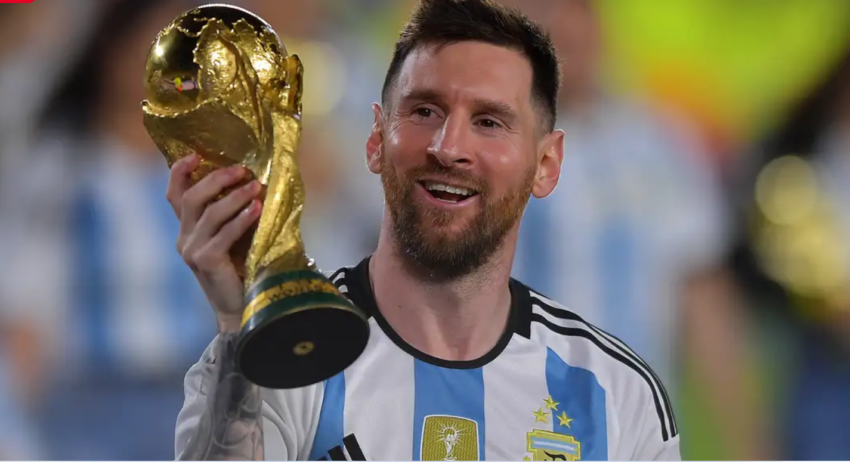
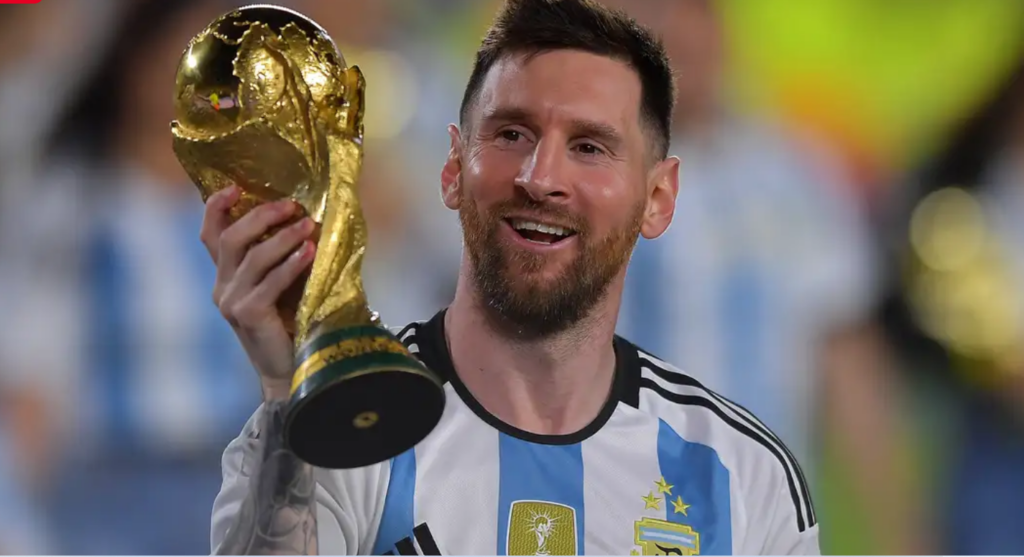
If the Lionel Messi biography has a defining crescendo, it is the 2022 FIFA World Cup in Qatar. Messi led Argentina through the tournament with extraordinary leadership, scoring seven goals and registering three assists. The final against France on December 18, 2022 is widely considered the greatest World Cup final in history — a 3–3 draw after extra time, settled on penalties, in which Messi scored twice. Argentina won 4–2 on penalties, and Messi lifted the World Cup trophy for the first time.
He was awarded the Golden Ball as the tournament’s best player — his second after 2014 — and his celebration image with the World Cup trophy became the most-liked Instagram post in history at the time. The victory erased every doubt, ended every debate, and placed the final seal on his claim to be the greatest footballer of all time.
Lionel Messi Personal Life: Wife Antonela and Family
The personal chapter of the Lionel Messi biography is a love story that began in childhood. Messi first met Antonela Roccuzzo in Rosario when they were both young children — Antonela is the cousin of Messi’s close childhood friend. They reconnected in their teens and began a romantic relationship that has endured and deepened through every stage of Messi’s remarkable career.
On June 30, 2017, Lionel and Antonela married in a lavish but deeply personal ceremony in Rosario, attended by family, close friends, and many of Messi’s football colleagues. The wedding was a celebration of their roots — a love story that began on the streets of their hometown. Antonela Roccuzzo is not merely a famous footballer’s wife; she is a model, entrepreneur, social media influencer with tens of millions of followers, and co-owner of a fashion boutique. She is widely admired for her elegance, warmth, and visible commitment to her family.
Together, Lionel and Antonela have three sons: Thiago, born in November 2012; Mateo, born in September 2015; and Ciro, born in March 2018. Messi has described fatherhood as the greatest gift of his life. He is regularly photographed in tender moments with his sons, who are often seen at his matches. In 2023, following his move to Inter Miami, the family relocated to Miami, Florida, establishing a new family home in the United States while maintaining connections to Argentina and Spain.
Lionel Messi’s Records and Individual Awards
The statistical and award legacy in the Lionel Messi biography is unparalleled in the history of football:
- 8 Ballon d’Or awards (2009, 2010, 2011, 2012, 2015, 2019, 2021, 2023) — more than any player in history
- 8 FIFA World Player of the Year / Best FIFA Men’s Player awards
- 6 European Golden Shoe awards — the most by any player
- 900+ career goals across all competitions (as of March 2026)
- 672 goals for FC Barcelona — the most by any player for a single club
- 474 La Liga goals — the most in the history of the competition
- 91 goals in a single calendar year (2012) — a world record
- Most goals in FIFA World Cup history — 19 goals (as of 2026)
- Most assists in international football history — 61 assists
- Most career assists in all competitions — surpassing Puskás in 2025 with 405+
- 46 team trophies — the most in professional football history
- 2025 IFFHS All-Time Men’s World Best Player award
- Time’s Athlete of the Year (2023); Presidential Medal of Freedom (USA, 2025)
- Back-to-back MLS MVP (2024, 2025) — first player in MLS history to win the award twice
Lionel Messi Net Worth 2026
The financial dimension of the Lionel Messi biography is as remarkable as his athletic achievements. In 2026, Messi made his debut appearance on Forbes’ World’s Billionaires list with an estimated net worth of approximately $1.1 billion — making him one of the very few athletes to reach billionaire status during an active playing career.
His income streams are diverse and formidable. He earns between $70 million and $80 million per year from Inter Miami through salary, compensation, and equity rights. His lifetime endorsement deal with Adidas, alongside partnerships with Pepsi, Gatorade, Budweiser, Hard Rock, and other major global brands, generates hundreds of millions in additional income. His business ventures include the sports drink brand Más+ (launched June 2024), the production company 525 Rosario (launched September 2024), substantial real estate holdings valued at over $300 million, and the ownership of Spanish football club UE Cornellà, acquired in April 2026.
Lionel Messi’s Philanthropy and Charitable Work
A complete Lionel Messi biography must include the dimension of his humanitarian work, which reflects the depth of his character beyond football. Messi serves as a UNICEF Goodwill Ambassador and has been involved in various global charitable campaigns focused on children’s welfare, health, and education. He founded the Leo Messi Foundation, which supports access to education, healthcare, and sport for vulnerable children around the world. The foundation’s work spans Argentina, Spain, and several other countries, and has touched the lives of thousands of children who might otherwise lack access to basic opportunities.
Messi’s commitment to charitable work stems partly from the medical challenges he faced as a child. The experience of needing financial assistance for his own growth hormone treatment gave him a personal connection to the vulnerability that many children face when access to healthcare is limited by economic circumstances. His philanthropy is quiet, consistent, and deeply personal — reflecting the same humility that has characterised his entire public life.
The Legacy of Lionel Messi: GOAT Debate and Global Impact
Few questions in sport have generated as much passionate debate as whether Lionel Messi or Cristiano Ronaldo is the greater player. As of 2025, Messi holds 45 team and individual trophies to Ronaldo’s 34, and in 2025, the IFFHS named Messi the All-Time Men’s World Best Player — a recognition that represents a formal institutional acknowledgment of his status. The 2022 World Cup victory, which Ronaldo has never achieved, is widely seen as the defining distinguishing factor.
But the Lionel Messi biography’s legacy extends far beyond trophies and statistics. Messi transformed a generation’s understanding of what football can be. He showed that a player of relatively small physical stature — at 5 ft 7 in — could dominate the sport through intelligence, technical mastery, vision, and relentless work ethic. He demonstrated that humility, family values, and loyalty to one’s roots are not incompatible with the highest levels of sporting ambition. He also showed, through his time in MLS, that football’s best players need not confine themselves to European football — an attitude that has done more to grow the global profile of American soccer than any other single development.
A life-sized statue of Messi was unveiled outside CONMEBOL headquarters in Paraguay in March 2023. A 70-foot statue was unveiled in Kolkata, India in December 2025. An 85-foot statue was erected in Cutral Co, Patagonia in June 2026. These are not just tributes to a footballer; they are monuments to a human story of perseverance, faith, and the relentless pursuit of excellence.
Frequently Asked Questions About Lionel Messi
What is Lionel Messi’s full name?
Lionel Messi’s full name is Lionel Andrés Messi.
How old is Lionel Messi in 2026?
Lionel Messi is 38 years old in 2026. He was born on June 24, 1987, in Rosario, Argentina.
Who is Lionel Messi’s wife?
Lionel Messi’s wife is Antonela Roccuzzo. They are childhood sweethearts from Rosario, Argentina, and married on June 30, 2017. They have three sons: Thiago, Mateo, and Ciro.
How many Ballon d’Or awards has Messi won?
Messi has won eight Ballon d’Or awards — in 2009, 2010, 2011, 2012, 2015, 2019, 2021, and 2023 — more than any player in football history.
Has Lionel Messi won the FIFA World Cup?
Yes. Lionel Messi won the FIFA World Cup in 2022 with Argentina, defeating France on penalties in what is widely regarded as the greatest World Cup final in history. He was awarded the Golden Ball as the tournament’s best player.
What club does Lionel Messi currently play for?
As of 2026, Lionel Messi plays for Inter Miami CF in Major League Soccer (MLS). He signed a contract extension through the 2028 season.
What is Lionel Messi’s net worth?
Lionel Messi’s net worth is estimated at approximately $1.1 billion as of 2026, making him one of the very few athletes to achieve billionaire status during an active career.
How many career goals has Messi scored?
Messi has scored over 900 career goals across all competitions as of March 2026, when he scored his 900th goal during an Inter Miami CONCACAF Champions Cup match.
Conclusion: A Story Still Being Written
The Lionel Messi biography is, in many ways, still unfolding. At 38 years old, playing in the United States, committed to his club through 2028 and to the Argentina national team for the 2026 FIFA World Cup — which will be held in the USA, Canada, and Mexico — Messi continues to write new chapters of an already extraordinary story. His 900+ career goals, his MLS Cup triumph, his billionaire status, and the statues being erected in his honour across the world are all part of a legacy that will endure long after he has played his final match.
From a working-class family in Rosario to the heights of global sporting glory; from a boy who needed financial help to afford medical treatment to a billionaire whose face adorns cities around the world; from heartbreaking World Cup final defeats to the triumphant lifting of the trophy in Qatar — the Lionel Messi biography is, at its core, a story about what happens when extraordinary talent meets extraordinary character. There has never been anyone quite like him. There may never be again.