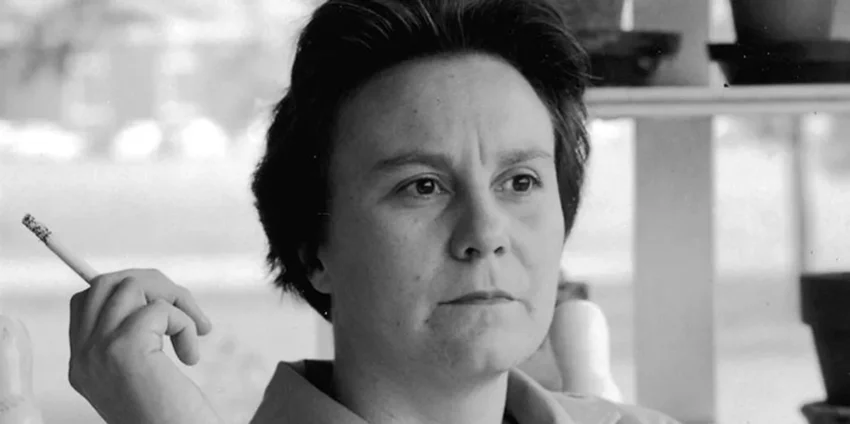
Nelle Harper Lee is one of the most celebrated and impactful writers in American literary history, the author of a single novel that so powerfully captured the moral landscape of race, justice, and childhood innocence in the American South that it has sold over 40 million copies, been translated into dozens of languages, and has never gone out of print since its publication in 1960.
Raised in Monroeville, Alabama, a small Southern town that formed the spiritual and geographical centre of her masterwork To Kill a Mockingbird, she lived most of her adult life in deliberate, principled obscurity, allowing her work to speak where she refused to.
Her story is one of the most compelling and paradoxical in all of American letters: a woman who wrote one of the world’s most widely read books and then largely retreated from the world it created.
Profile
| Full Name | Nelle Harper Lee |
| Born | April 28, 1926 |
| Died | February 19, 2016 |
| Birthplace | Monroeville, Alabama, United States |
| Nationality | American |
| Occupation | Author, Novelist |
| Father | Amasa Coleman Lee (lawyer, state legislator) |
| Mother | Frances Cunningham Finch Lee |
| Siblings | Three older siblings; sister Alice Lee (also a lawyer) |
| Relationship | Never married |
| Net Worth | Estimated $35 million (at time of death) |
Early Life
Nelle Harper Lee was born on April 28, 1926, in Monroeville, a small county seat town in Monroe County, Alabama, as the youngest of four children of Amasa Coleman Lee and Frances Cunningham Finch Lee. Her father, Amasa Lee, who would serve as the primary inspiration for Atticus Finch, the heroic lawyer of To Kill a Mockingbird — was a prominent attorney in Monroeville who also served in the Alabama state legislature. He was, by all accounts, a man of remarkable moral soundness and civic courage, and the parallels between his character and that of his fictional counterpart are unmistakable.
Harper Lee grew up in Monroeville during the 1930s, the era of the Great Depression, the New Deal, and the deeply entrenched racial segregation of the Jim Crow South. Her childhood was profoundly shaped by two experiences that would directly inform her novel. First, when she was approximately five years old, the Scottsboro Boys case, in which nine Black youths were wrongfully convicted of raping two white women in Alabama, was being widely covered in newspapers, exposing her to the injustice of racially motivated verdicts from an early age. Second, her childhood next-door neighbour from 1928 to 1933 was Truman Capote, who would go on to become one of America’s most celebrated writers. Their close childhood friendship shaped both writers: Capote clearly influenced the character of Dill in To Kill a Mockingbird, while Lee was the inspiration for the character Idabel in Capote’s Other Voices, Other Rooms (1948).
She was an avid reader from her earliest years, absorbing the literary and moral imagination that would eventually produce one of the 20th century’s most enduring works of fiction.
Education
Harper Lee received her early education in Monroeville, Alabama, where she attended local schools that instilled both academic discipline and a deep awareness of the social environment that would become the setting for her fiction. In 1944, at the age of 18, she enrolled at Huntingdon College in Montgomery, Alabama. From 1945 to 1949, she pursued a law degree at the University of Alabama, following in her father’s professional footsteps. During her law studies, she transferred to Oxford University in England as an exchange student for one year, demonstrating both her academic standing and her intellectual ambition. However, six months before completing her law studies, she made the momentous decision to abandon law and move to New York City to pursue her true ambition: becoming a writer. It was a decision that would change American literary history.
Career
In New York in the early 1950s, Harper Lee worked as an airline reservations clerk, first for Eastern Airlines and later for the British Overseas Airways Corporation (BOAC), to support herself financially while writing in her spare time. This period of modest employment alongside private creative labour was the crucible in which To Kill a Mockingbird was forged.
A pivotal moment came when friends and supporters, recognising her exceptional talent, gave her a year’s wages as a gift to allow her to write full-time. This act of generosity freed her to commit entirely to the manuscript she had been developing. She worked closely with editor Tay Hohoff at J. B. Lippincott Company, whose guidance shaped the novel into its final published form.
In July 1960, To Kill a Mockingbird was published. The novel, set in the fictional Alabama town of Maycomb in the 1930s and narrated by young Scout Finch as she observes her father, lawyer Atticus Finch, defend a Black man wrongfully accused of raping a white woman, was an immediate critical and commercial success. Within a year of publication, it had won the Pulitzer Prize for Fiction (1961), the Brotherhood Award of the National Conference of Christians and Jews, the Alabama Library Association Award, and numerous other honours. It became an international bestseller, translated globally and selling millions of copies in its first decade alone.
In 1959, she had also accompanied her childhood friend Truman Capote to Garden City, Kansas, to research the Clutter family murders for what would become Capote’s landmark work In Cold Blood (1965). Capote dedicated In Cold Blood to Lee and his partner Jack Dunphy, acknowledging her indispensable contributions to his research.
In 1962, the film adaptation of To Kill a Mockingbird — starring Gregory Peck as Atticus Finch, was released to enormous acclaim. Nominated for eight Academy Awards and winning three (Best Actor for Peck, Best Adapted Screenplay for Horton Foote, and Best Art Direction), it remains one of the most celebrated films in American cinema history. Lee worked as a consultant on the screenplay.
Following the novel’s extraordinary success, Lee largely retreated from public life. She gave only a handful of interviews, declined the vast majority of requests for appearances and commentary, and published almost nothing further for decades. A kitchen accident in 1965 that severely injured her hand contributed to her inability to write, but her withdrawal from public life was also a deliberate choice to protect her privacy and mental health. She quietly returned to Monroeville, where she divided her time between her Alabama hometown and New York.
Nearly 55 years after her first novel, Lee published Go Set a Watchman in July 2015, a novel written before To Kill a Mockingbird that follows the adult Scout Finch returning to Maycomb to visit her aging father. Its publication generated enormous controversy, particularly for its portrayal of Atticus Finch in a morally ambiguous light, and raised questions about the circumstances under which Lee had authorised its publication given her declining health. Nevertheless, it became an instant number-one bestseller.
Awards & Nominations
- Pulitzer Prize for Fiction – To Kill a Mockingbird (1961) – Won
- Brotherhood Award of the National Conference of Christians and Jews (1961)
- Alabama Library Association Award (1961)
- Bestsellers Paperback of the Year Award (1962)
- Alabama Humanities Award – Alabama Humanities Foundation (2002)
- Lifetime Achievement Award – Birmingham Pledge Foundation (2005)
- Presidential Medal of Freedom (2007) – awarded by President George W. Bush
- National Medal of Arts – awarded by President Barack Obama
- Harper Lee Award for a Distinguished Alabama Writer – established in her honour in 1998
Social Media
Harper Lee lived the majority of her adult life during the pre-social media era and was a notably private person who avoided public attention. She never maintained any social media presence. Her literary estate and the ongoing publication of her works are managed by representatives who maintain an official presence in professional publishing circles.
Personal Life
Harper Lee never married, a fact she reportedly regarded with equanimity as the result of a life devoted to literature rather than domesticity. She maintained a close friendship with her older sister Alice Lee, also a lawyer, with whom she shared her time in Monroeville. Alice Lee, who practised law until she was nearly 100 years old, was both Harper’s legal representative and closest family companion. Harper Lee’s public persona was shaped by her deep reserve, she was, as her publisher described her, a person “of great joyfulness, humility and kindness” who lived her life “the way she wanted to, in private, surrounded by books and the people who loved her.”
Her relationship with Truman Capote, whose influence on her childhood was enormous and whose literary career in some respects paralleled hers, was complex. The two remained close for years but grew apart as their careers and personalities diverged. Lee’s contribution to In Cold Blood was acknowledged by Capote in the dedication, though some scholars believe her contribution was more substantial than the dedication alone suggests.
In her later years, Harper Lee suffered a series of health challenges, including a stroke in 2007 that affected her vision and hearing, and she spent her final years in an assisted living facility in Monroeville. She died peacefully in her sleep on February 19, 2016, at the age of 89.
Net Worth
Harper Lee’s estimated net worth at the time of her death in 2016 was approximately $35 million, accumulated almost entirely from the extraordinary and enduring royalties generated by To Kill a Mockingbird — one of the world’s most consistently bestselling novels. Over 40 million copies have been sold worldwide, making it one of the best-selling novels in the history of American fiction. Film royalties, stage adaptation fees, and the publication of Go Set a Watchman in 2015 contributed additional income in her final years.
Bibliography
- To Kill a Mockingbird (1960) – Novel; Pulitzer Prize winner
- Go Set a Watchman (2015) – Novel
- The Land of Sweet Forever: Stories and Essays (2025, posthumous) – Short story and essay collection
- “Romance and High Adventure” (1983) – Essay
FAQs
Who is Harper Lee?
Harper Lee (born Nelle Harper Lee, April 28, 1926 – February 19, 2016) was an American author best known for her Pulitzer Prize-winning novel To Kill a Mockingbird (1960), one of the most widely read and celebrated works of fiction in American literary history.
What is Harper Lee’s most famous book?
To Kill a Mockingbird (1960), which won the 1961 Pulitzer Prize for Fiction and has sold over 40 million copies worldwide.
Was Harper Lee friends with Truman Capote?
Yes. They were childhood neighbours and close friends in Monroeville, Alabama, and each influenced the other’s literary work. Lee assisted Capote in researching In Cold Blood (1965), to which Capote dedicated the book.
When did Harper Lee die?
She died in her sleep on February 19, 2016, in Monroeville, Alabama, at the age of 89.
Did Harper Lee win a Pulitzer Prize?
Yes. She won the Pulitzer Prize for Fiction in 1961 for To Kill a Mockingbird.
Conclusion
Harper Lee’s legacy rests on one of the most remarkable paradoxes in literary history: a writer who wrote relatively little but whose impact on the world’s moral imagination through that single novel has been incalculable. To Kill a Mockingbird has taught generations of readers, in America and around the world, about racial injustice, moral courage, and the responsibility of individuals to stand against the crowd. Her life, quiet, private, purposeful, was as much a statement as her work. In an era of self-promotion and celebrity, she chose principled obscurity, allowing Atticus Finch and Scout to live more fully in the world than she ever permitted herself to do. That choice, too, is part of her enduring legacy.